
NEWS
Vatican Breaks Silence on Alleged Genocide Against Christians in Nigeria, Calls for Caution and Balanced Understanding of the Crisis

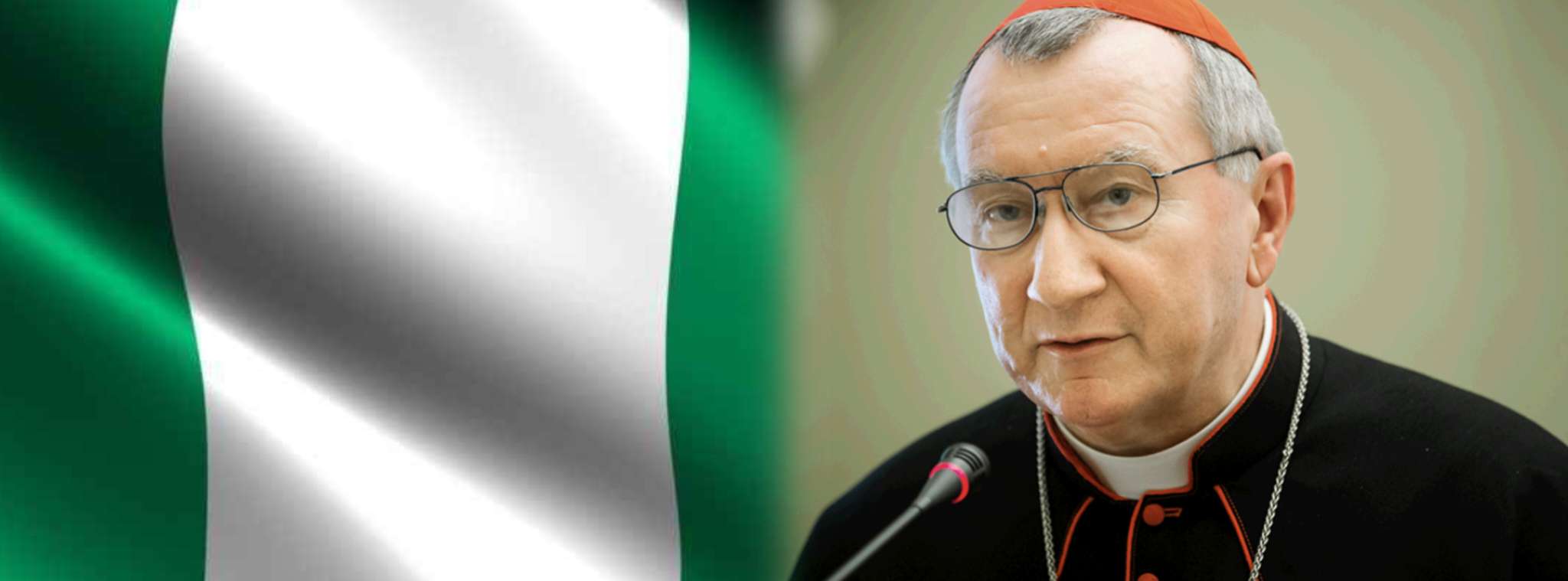
The Vatican has finally spoken out on the growing international narrative of an alleged genocide against Christians in Nigeria, a debate that has intensified in recent months following global outcries and high-profile statements.
Cardinal Pietro Parolin, the Vatican Secretary of State, addressed the sensitive issue while presenting a new global report on religious freedom by the Aid to the Church in Need (ACN) in Rome. His remarks come amid heated discussions triggered by comments made by Nigeria’s Vice President, Kashim Shettima, at the United Nations General Assembly in New York last month.
According to reports, Shettima’s call for peace in Gaza sparked a series of global reactions, including from American security contractor Eric Prince, who alleged that Christians in Nigeria were facing genocide.
Prince had gone as far as calling on “the Vatican, the Pope, President Donald Trump, and Christian leaders worldwide to fund and support a private Christian army to protect the Christian community in Nigeria.”
However, Cardinal Parolin firmly dismissed such assertions, urging the international community to exercise caution before labeling Nigeria’s complex security challenges as religious genocide.
According to him, the crisis in Nigeria is far more multifaceted, rooted deeply in social and ethnic tensions rather than purely religious divisions.
“It is not a religious conflict. Much of the violence stems from social causes such as land disputes between herders and farmers in the North-Central region.
“We should also recognise that many Muslims in Nigeria are themselves victims of this same intolerance. These are extremist groups that make no distinctions in pursuing their goals. They use violence against anyone they see as an opponent,” Parolin said.
Also speaking at the Vatican event, Bishop Matthew Hassan Kukah of the Sokoto Diocese urged global stakeholders to resist calls for Nigeria to be designated as a “Country of Particular Concern” (CPC). He cautioned that such a move could jeopardize the fragile progress being made in interfaith dialogue and national peace-building.
Bishop Kukah, who represented Nigeria at the launch of the ACN 2025 World Report on Religious Freedom, acknowledged that Nigeria is struggling with deep-rooted social and governance issues but emphasized that the country needs support, not punishment.
“We are not dealing with people going around wielding machetes to kill me because I am a Christian. I live and work in Sokoto, right in the womb of Islam, where collaboration between Christians and Muslims remains possible. Our lives should be defined by a better narrative,” he said.
Kukah, however, admitted that the breakdown of security across Nigeria has created what he described as “conditions for genocide” in some communities. He blamed the worsening crisis on poor governance, weak institutions, and the failure of both federal and state authorities to protect citizens.
“Nigerians are dying unacceptable deaths across the country not only because of their religion but also their ethnicity. We are in the cusp of a weak state with a clear lack of capacity to arrest the descent into anarchy,” he lamented.
Reflecting on Nigeria’s recent political history, Bishop Kukah described the administration of former President Muhammadu Buhari as “the worst phase in interfaith relations.” He accused Buhari of fostering a system that alienated Christians and emboldened extremist elements.
“Under Buhari, to gain power, it was more important to be a northern Muslim than to be a citizen of Nigeria,” he said.
In contrast, Kukah praised President Bola Ahmed Tinubu’s administration for demonstrating inclusiveness through balanced appointments that reflect Nigeria’s religious diversity.
“The President and Vice President are Muslims, yet Christians have not felt alienated. The Chief of Defence Staff, the Director of DSS, and the INEC Chairman are Christians. These are confidence-building measures aimed at restoring trust among Nigerians,” he noted.
Citing the 2025 Global Terrorism Index, Kukah revealed that Nigeria recorded a 37 percent drop in terrorist attacks over the past year, though he warned that religious identity still influences patterns of targeted violence, particularly in the northern regions.
He further urged the federal government to uphold constitutional principles by addressing the enforcement of Sharia law in some northern states, which he said fuels discrimination and mob justice.
“The President should go to court to have the adoption of Sharia law declared unconstitutional. The secular state anticipated by the Constitution must be enforced,” Kukah said.
The ACN 2025 World Report on Religious Freedom unveiled during the event painted a grim global picture, revealing that more than 5.4 billion people now live in countries where religious rights are restricted or under threat.
Recall that the issue of alleged Christian genocide in Nigeria recently gained renewed attention when U.S. Senator Ted Cruz raised alarm over what he described as “systematic attacks” on Christians in the country, a claim that sparked intense international debate and further scrutiny of Nigeria’s security situation.
With the Vatican’s latest clarification, the global narrative may begin to shift from one of religious persecution to a more nuanced understanding of Nigeria’s intertwined challenges of go
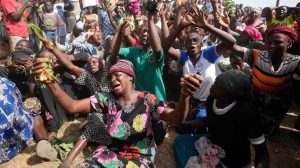 vernance, insecurity, and social inequality.