
NEWS
Nigeria Moves to Enforce Digital Tax Compliance as FG Partners With Over 100 Countries to Track Remote Workers’ Income

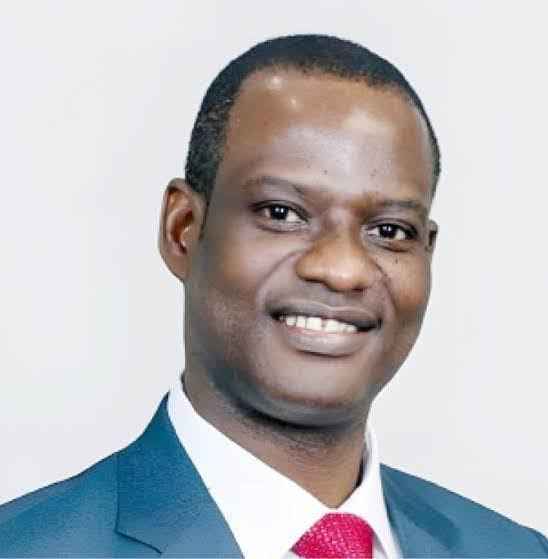
Nigeria has intensified its efforts to enforce tax compliance in the digital economy, entering into unprecedented data-sharing agreements with more than 100 countries to track the income, assets, and financial activities of Nigerians working remotely or earning online.
This revelation was made by the Chairman of the Presidential Committee on Fiscal Policy and Tax Reforms, Taiwo Oyedele, during a webinar hosted by the National Orientation Agency (NOA) on Wednesday, themed “Simplifying Nigeria’s Tax System.” Speaking to thousands of participants, Oyedele explained that the Federal Government is now equipped to monitor the revenue streams of Nigerians across global digital platforms, whether the earnings come from big tech corporations, outsourced digital tasks, or foreign employers.
According to him, every Nigerian involved in remote or online work must now take full responsibility for declaring their income, as the new tax system has been designed to automatically detect undeclared earnings.
“For the other categories of people who work online, the kind of people you spoke about, where companies just outsource something to them…you might have five stars, another person has 50.
“The requirement under this new law is that everybody, whether you earn your money from Google or whether you earn it from XYZ Limited in the Bahamas, you have to declare your income yourself. If you fail to do it, the system will then gather intelligence, which is when the money hits your bank account,” he stated.
Oyedele disclosed that Nigeria’s participation in global financial intelligence frameworks has given the government access to records of Nigerians who receive foreign payments or maintain assets overseas. He revealed that under the Common Reporting Standards (CRS), countries already transmit data on Nigerian account holders, property owners, and investors abroad.
In his words:
“We see this money coming to your Dollar Bank account. If you put the money abroad, Nigeria has signed an agreement with over 100 countries under what is called the Common Reporting Standards. They are already sending us data about Nigerians who have money abroad, property abroad, whether it’s Dubai to the US to Canada to the UK. We have all that information already.”
He cautioned that the era of hiding taxable income, whether onshore or offshore is over.
“Essentially, my point is, if it’s about data, the government can get the data. The primary obligation is to do the right thing yourself. If you fail to do it, the government will then come back to you and say, ‘We know this about you, you haven’t been honest, here’s your presumptive assessment.’ And at that point, you have to deal with it.”
Oyedele also recalled Nigeria’s engagement with global technology giants three to four years ago, which addressed the imbalance between traditional brick-and-mortar businesses and online platforms regarding Value Added Tax (VAT). He explained the government’s position:
“If you are doing your business, brick and mortar, pop and mom shop, and you sell a phone and you charge VAT, why should the person that is selling it online not charge VAT?
“We went to these guys and said the services you render is liable to VAT. You are getting an undue advantage by doing it from abroad.”
Rather than adopting a confrontational approach, he said the government opted for collaboration that led to impactful agreements.
“We spoke to them, what are your concerns, how can we make it work, and we landed on an agreement. Today I can tell you Nigeria is making billions of dollars from those taxes, from those digital giants without fighting.”
Oyedele acknowledged an error in the newly signed tax legislation regarding turnover thresholds, stating:
“Section 147 of the Nigerian Tax Administration Act says N100 million. Section 202 of the Nigerian Tax Act says N50 million for turnover. The answer to your question is yes, it was an error.”
He explained that the mistake emerged during the gazetting process shortly after President Bola Tinubu signed the bills into law on June 26, 2025.
“The Department of Government that is supposed to do the gazetting… said they’ve never done anything like that before. In the process of editing, typesetting, the 50 that was there originally went into one of the laws.”
Despite spending months attempting to correct the error, the committee resolved to proceed with implementation while preparing amendments for the next legislative cycle.
“The minimum threshold for exemption is 100 million. That’s what you’ll find when the regulations are out. Let’s move forward so our good becomes better than wait until it is best,” he clarified.
The committee further clarified that Nigeria’s new Capital Gains Tax (CGT) framework would not retroactively tax investment profits made before 2026.
A statement released by the committee emphasized that the new regime set to commence on January 1, 2026, under the proposed Nigeria Tax Act 2025, includes a cost basis reset and a grandfathering clause to ensure fairness. This means gains earned before the reform will be preserved, while only new gains realized from 2026 onward will be taxable.