
CRIME
Investigators Trace Abubakar Malami’s Alleged ₦200 Billion Wealth to Paris Club Refunds, Anchor Borrowers’ Loans, and Abacha Loot Commission as EFCC Detains Former AGF Ahead of Court Arraignment

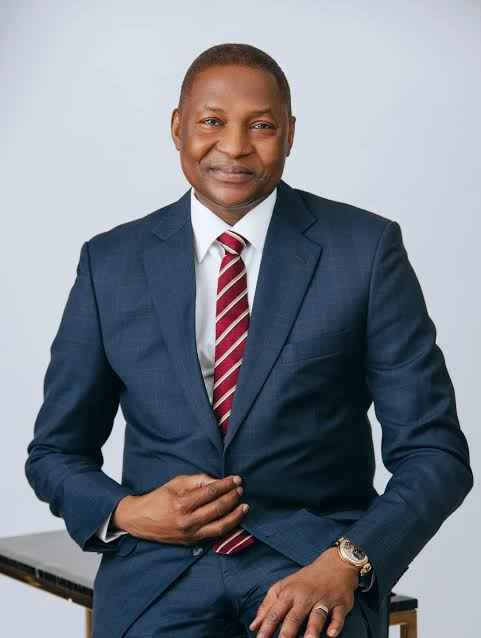
Investigations by the Economic and Financial Crimes Commission (EFCC) have linked a significant portion of the wealth amassed by Abubakar Malami, the former Attorney-General of the Federation, to multiple controversial financial sources. Sources familiar with the matter revealed that the former AGF’s wealth traces back primarily to Paris Club refunds made to states, unpaid loans under the Central Bank of Nigeria’s (CBN) anchor borrowers programme, and the restitution of funds looted by late military ruler Sani Abacha.
Malami has been detained by the EFCC pending his arraignment before a federal high court in Abuja. Investigators have reportedly traced properties worth over N200 billion to him, believed to have been acquired during his tenure as Attorney-General under former President Muhammadu Buhari from 2015 to 2023.
Malami, through his media team, has denied all allegations, framing them as politically motivated and asserting that he will defend himself in court.
At the center of the Paris Club refund issue, Malami advised the federal government to deduct $418 million from state allocations to pay consultants engaged to calculate refunds due to the states. Nigeria had exited the Paris Club of creditors in 2005 after paying $12 billion in exchange for a write-off of $18 billion of its $30 billion debt, accrued since the early 1980s.
Although most debts had been assumed by the federal government, many states did not owe foreign creditors. To address this, the federal government opted to refund the states, but engaged consultants whose fees exceeded $400 million.
The Nigeria Governors’ Forum (NGF) opposed the arrangement, accusing Malami of pursuing “selfish interest” and claiming he was acting on behalf of the consultants rather than the nation. The NGF stated in a 2021–2022 media confrontation:
“We’re constrained by the manner in which the honorable attorney-general has been going around various media houses and purporting to create the impression that this is a liability to which governors had committed themselves to and agreed to, even though he is very much aware that that’s not the case.
“And we reject all of the claims that he has made on this issue. And we also insist that states will not give up on insisting that these purported claims are fraudulent and will not stand as far as governors are concerned and we would take every constitutional and legal means to ensure that these purported consultancy are fully litigated upon by the highest court in the land.”
EFCC investigators claim that the bulk of Malami’s sudden wealth stems from kickbacks linked to the Paris Club refund consultancy deal.
In 2015, the Central Bank of Nigeria launched the anchor borrowers programme (ABP) to stimulate local food production, generate employment, and reduce import dependence. The initiative was meant to provide farmers with seeds, fertiliser, and cash for labour to enhance production and link farm outputs to processors.
Investigators allege that Malami used his wife, Hajiya Bashir Asabe, to obtain a N4 billion loan under the programme, which remains unpaid. The wife has now been charged in court alongside him.
Sources revealed that the CBN disbursed over ₦1 trillion under the ABP but has yet to recover more than ₦600 billion, prompting speculation that a significant portion of the funds may have been diverted as slush funds for political figures.
Malami’s involvement in the repatriation of Sani Abacha’s stolen funds has also come under scrutiny. In 2016, he engaged two Nigerian lawyers, Oladipo Okpeseyi and Temitope Isaac Adebayo to assist in recovering $321 million looted by the late military ruler.
The recovered funds were originally managed by Swiss lawyers before Malami’s intervention. Nigeria had already paid fees to the Swiss lawyers, including roughly $6.8 million for recoveries in Liechtenstein.
Investigators allege that in December 2017, Malami duplicated the Swiss lawyers’ work by hiring the two Nigerian lawyers at a cost of $16.9 million in commissions and professional fees, creating a separate payout from the recovered Abacha funds. EFCC sources said the payments from this duplicated commission were traced directly to Malami.
Okpeseyi and Adebayo have been detained and interrogated by the EFCC. A source familiar with the case said:
“They made useful statements to the EFCC.”
The unfolding investigation has reignited debates over corruption, mismanagement of public funds, and accountability at the highest levels of government, with Malami’s alleged wealth accumulation emerging as a focal point in Nigeria’s ongoing fight against graft.