
NEWS
Global Scam Economy Under Scrutiny as Cambodia’s $19 Billion Fraud Industry Sparks Debate as Nigeria Faces Disproportionate Global Blame

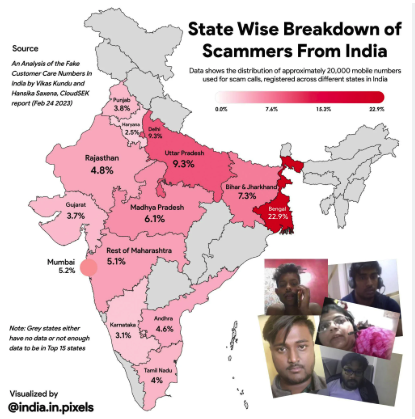
The global conversation on cybercrime and financial fraud is taking a dramatic turn following revelations that Cambodia’s scam economy has ballooned to an estimated $19 billion, an amount believed to account for nearly 40 percent of the nation’s Gross Domestic Product (GDP).
This staggering figure has reignited international discourse on the scale and geography of organized fraud networks, challenging long-standing narratives that have disproportionately spotlighted Nigeria as a global epicenter of scams.
Recent data paints a broader and more complex picture of the global scam economy. In India, for instance, call-center fraud operations targeting victims in the United States alone are estimated to generate between $10 billion and $12 billion annually. When additional operations targeting other regions, including the United Kingdom, Canada, Australia, countries across the European Union, and the Middle East—are factored in, the total figures rise by several more billions of dollars.
Globally, experts estimate that scam-related activities now generate approximately $20 billion annually, underscoring the industrial scale of fraud networks operating across multiple continents.
Cambodia’s case is particularly alarming due to the sheer proportion of its economy tied to scam operations. Analysts point to a growing ecosystem of organized cybercrime hubs, often linked to transnational syndicates, which have leveraged technology, weak regulatory frameworks, and vulnerable populations to expand their reach.
Despite these developments, public discourse and media narratives continue to heavily focus on Nigeria whenever conversations about scams arise. Critics argue that this narrow framing ignores the evolving and geographically diverse nature of global fraud networks, while reinforcing outdated stereotypes.
Observers are now calling for a more balanced and evidence-based global conversation, one that acknowledges the widespread nature of scam economies and addresses the systemic issues enabling them, rather than singling out specific countries without context.
As the digital economy expands, the urgency for coordinated international action, stronger regulations, and public awareness has never been greater. The figures emerging from Cambodia and other regions serve as a stark reminder that cybercrime is no longer confined to isolated pockets but has become a globalized industry demanding a global response.