
NEWS
“NDC Logo Dispute Was Always Before the Court, INEC Never Changed Position“ – Says Legal Practitioner, Liborous Oshoma

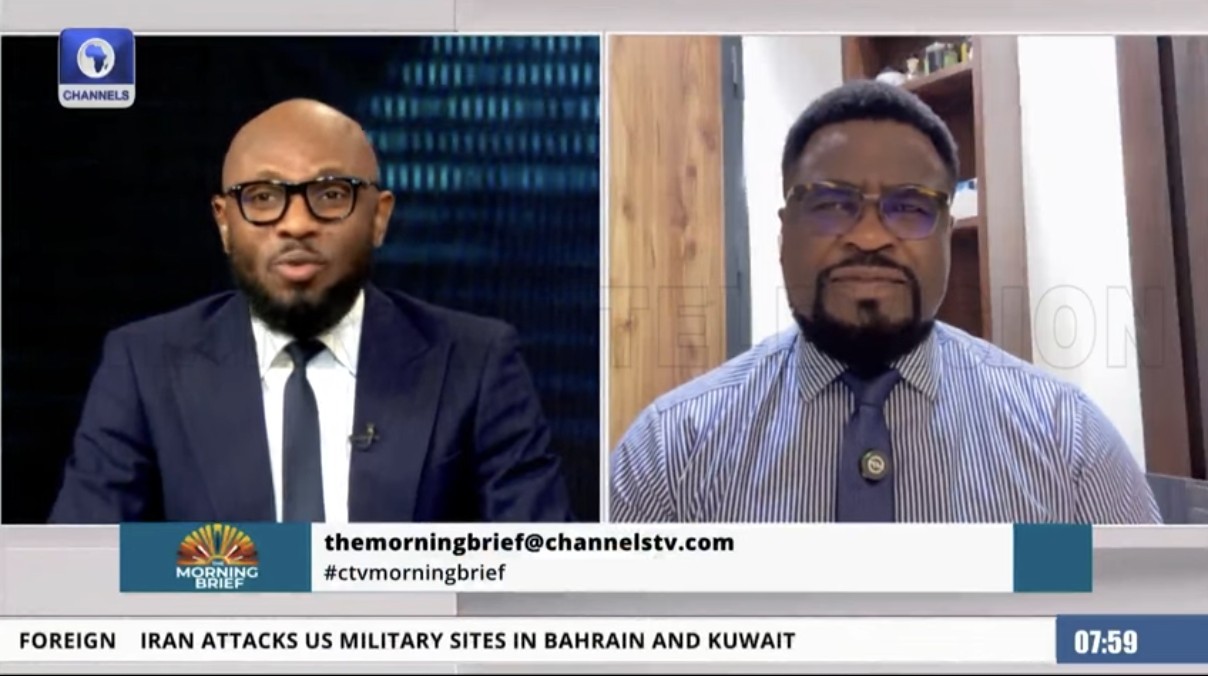
Legal practitioner Liborous Oshoma has maintained that the Independent National Electoral Commission (INEC) consistently identified the alleged conflict surrounding the Nigeria Democratic Congress (NDC)’s logo as the sole reason for declining to register the political party, arguing that the issue was never concealed from the court throughout the legal proceedings.
Speaking during an interview on Channels Television, Oshoma explained that the controversy over the party’s logo formed the core of INEC’s opposition from the onset of the case.
According to him, the electoral commission clearly presented its position in its counter-affidavit filed in response to the suit instituted by the NDC.
He argued that the issue of the logo was extensively canvassed before the trial court, stressing that INEC never introduced any new argument outside what had already been placed on record.
According to the lawyer, the commission’s position remained unchanged throughout the litigation. He maintained that the alleged similarity between the NDC’s logo and that of another association was the only objection INEC repeatedly raised against the party’s registration.
Oshoma further noted that since the logo dispute had already been presented before the court and argued by all parties, it could not subsequently be classified as fresh evidence capable of warranting a review or reversal of the judgment.
He explained that the trial judge was fully aware of INEC’s objections before issuing the order directing the commission to register the NDC. In his view, the court reached its decision after considering the arguments surrounding the disputed logo.
The legal practitioner also contended that the application filed after the judgment, seeking to have the court set aside its earlier decision, did not introduce any new material fact concerning the disputed logo that had not already been examined during the original proceedings.
He maintained that the records of the court clearly reflected INEC’s objections, making it difficult to sustain any argument that the issue had been suppressed, omitted, or overlooked during the hearing.
Oshoma stressed that the consistency of INEC’s position throughout the litigation underscored the fact that the logo dispute had always been central to the case and had remained the commission’s principal reason for refusing to register the political party.
“INEC consistently maintained from the beginning that the only issue preventing registration was the conflicting logo,“ Oshoma said during the interview.