
NEWS
National Assembly Moves to Harmonise State Police Bill as Constitutional Amendment Nears Final Stage

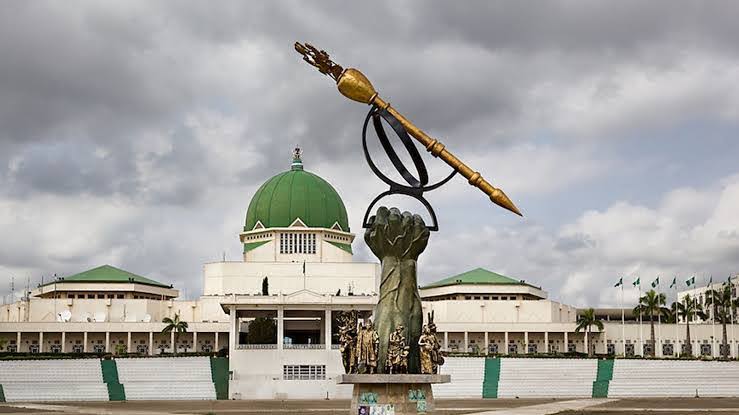
The National Assembly is set to commence the harmonisation of the Senate and House of Representatives versions of the Constitution Alteration Bill seeking the establishment of state police, marking another significant step towards one of Nigeria’s most anticipated constitutional reforms.
The harmonisation process will pave the way for the transmission of the proposed legislation to the 36 State Houses of Assembly for consideration and approval, in line with constitutional requirements.
The development follows the passage of separate versions of the bill by both chambers of the National Assembly. While the House of Representatives approved its version on June 10, the Senate passed the Executive Bill transmitted by President Bola Tinubu on June 24.
For the constitutional amendment to become law, it must secure the endorsement of no fewer than two-thirds of the State Houses of Assembly before being forwarded to President Bola Tinubu for presidential assent.
Although both chambers are united in their commitment to establishing state police, notable differences exist between their respective versions of the legislation. The Senate’s version comprises 26 clauses, while the House version contains 18 clauses, reflecting varying approaches to several constitutional amendments.
A comparison of the two versions reveals that the House made limited amendments to Sections 34, 35, 39, 42, 89, 129, 153 and 197 of the Constitution. In contrast, the Senate proposed amendments to Sections 84, 89, 121, 124, 129, 157, 158, 160, 197, 201 and 202.
Both chambers also proposed a completely new Section 214 to replace the existing constitutional provision establishing the Nigeria Police Force. However, while the House version contains seven new sub-clauses, the Senate expanded the section considerably by introducing 15 sub-clauses.
Further differences emerged in the proposed amendment to Section 215, which addresses the appointment and control of the police.
The Senate titled the section “Appointment, Command, Direction and Tenure,” designating the head of a state police command as “Commander.” The House, however, retained the title “Appointment of Inspector-General of Police and Commissioner of Police of a State,” while referring to the head of the state police as “Commissioner of Police.”
Similarly, both chambers proposed entirely new provisions for Section 216 but assigned different functions to the section.
The Senate adopted the title “National Police Standards, Oversight and Accountability,” while the House preferred “Removal of Inspector-General of Police and Commissioner of Police of a State.”
In addition, the Senate version introduces seven transitional provisions to facilitate the establishment of state police and contains significant amendments to the Second, Third and Fourth Schedules of the Constitution. By comparison, the House version amends only the Second and Third Schedules.
Speaking on the next stage of the legislative process, Deputy Speaker of the House of Representatives and Chairman of the House Committee on Constitution Review, Rt. Hon. Benjamin Okezie Kalu, disclosed that a conference committee would be constituted immediately after lawmakers resume from recess on July 7 to reconcile the differences between both versions.
House spokesman Akin Rotimi also confirmed that the committee would harmonise the two versions before the final document is transmitted to the states.
Kalu described the bill as the outcome of extensive consultations involving the Executive and several stakeholders.
“In fact, at the moment, it is considered an Executive Bill.
“We have handled it at the House of Representatives, and the Senate has followed suit.
“Where we are now is that we’re going to have what we call the conference committee because we practise bicameral legislation,“ he said.
He stressed that there were no significant disagreements between the Senate and House versions.
“There is nothing fundamental. But we must be in tandem for it to become a unified piece of legislation from the National Assembly,“ he added.
Expressing optimism about the timeline for concluding the process, Kalu stated that lawmakers intend to move swiftly once they return from recess.
“Once we come back from recess on July 7, the House will constitute the conference committee. If there is any need to convene an emergency meeting before then, the leadership of the National Assembly will consider it.
“Once we are done, we intend to hand it over to the states the same day. It will be a ceremonial handover where we invite the Speakers of the state Houses of Assembly and formally present the bill to them.
“I believe the governors have already done the groundwork and, once it gets to them, it should be back within a week for Mr President’s assent,“ he said.
The Deputy Speaker further disclosed that the proposal has already received widespread national backing, including support from state governors and the Conference of Speakers, which has pledged to ensure speedy consideration of the bill by state legislatures.
He also explained that the proposed constitutional amendment contains safeguards designed to prevent abuse of state police by governors while maintaining national policing standards.
“The National Police Council will set the minimum standards. Any state that wants to establish a police service must meet those requirements before it is certified.
“States are free to exceed those standards, but the minimum benchmark is necessary to ensure professionalism and accountability,“ he said.
Meanwhile, Lagos State Governor Babajide Sanwo-Olu has declared that Lagos is fully prepared to establish its own state police service once the constitutional amendment becomes law.
According to the governor, the state plans to leverage the expertise and experience of retired security chiefs to build a robust security architecture capable of addressing the unique policing challenges of Nigeria’s commercial capital.
The successful harmonisation of the bill and its subsequent approval by the required number of State Houses of Assembly would represent a landmark constitutional reform, potentially ushering in a new era of decentralised policing aimed at improving security, accountability and law enforcement across the federation.