
NEWS
Dangote Refinery Moves Closer to $5bn IPO, as Nigerians May Become Shareholders

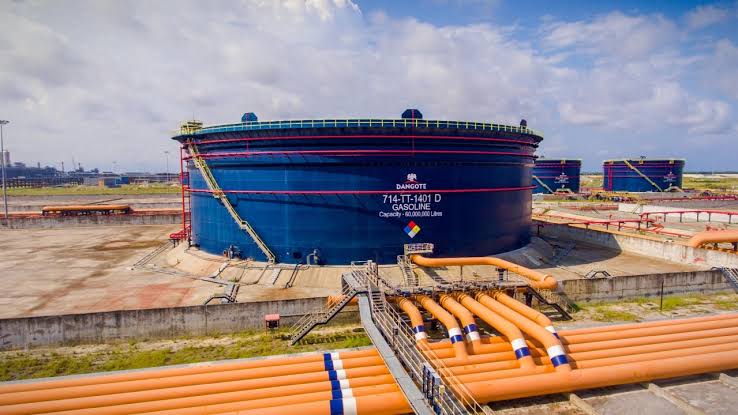
Nigerians may soon have the opportunity to own a stake in one of the country’s most ambitious industrial projects as the Dangote Petroleum Refinery moves closer to a potential $5 billion initial public offering (IPO).
The Securities and Exchange Commission (SEC) has received an application relating to the proposed share sale, which could rank among the largest capital market transactions in Nigeria’s history if approved and successfully executed.
The proposed IPO would open the door for both retail and institutional investors to acquire equity in the multibillion-dollar refinery, potentially transforming the ownership structure of an asset that has become central to Nigeria’s petroleum industry.
However, the final size of the offering has not yet been determined, according to a source familiar with the matter.
‘People’s IPO’ to Give Nigerians Direct Ownership:-
Chief Executive Officer of Dangote Petroleum Refinery, David Bird, said the company intends to make the proposed share sale broadly accessible to Nigerians, describing it as a “people’s IPO.”
“We really want to drive participation,” Bird said in an interview with Reuters, signalling the company’s intention to encourage significant domestic ownership of the refinery.
The approach could make the proposed offering particularly significant for Nigeria’s retail investment community, giving ordinary Nigerians an opportunity to participate directly in the ownership and future growth of one of Africa’s largest industrial facilities.
For the Nigerian capital market, the transaction could also provide a major boost by increasing the number of large-scale companies available to investors and creating a new avenue for Nigerians to invest in the country’s energy and industrial sectors.
IPO to Help Finance Major Expansion:-
The planned listing comes as Dangote Refinery prepares for a massive expansion of its production capacity.
The company is targeting an increase to as much as 1.4 million barrels per day within the next three years, almost doubling its current capacity and further strengthening its position as one of the world’s largest refining facilities.
Bird said the expansion would be financed partly through proceeds from the IPO and additional debt.
The proposed public offering follows a major private placement completed in July, which raised $2.5 billion and placed the refinery’s valuation at approximately $40 billion.
The private placement, led by Africa Finance Corporation alongside a group of strategic investors, was reportedly 3.7 times oversubscribed, a strong indication of the level of investor confidence and appetite surrounding the refinery.
The transaction attracted considerable interest from both African and international institutional investors, strengthening expectations that a future IPO could generate substantial demand.
No Immediate Foreign Listing:-
Although international investors could participate in the Nigerian offering, Dangote Refinery does not currently intend to pursue an immediate foreign listing.
Bird said the company wants to establish at least three years of production and financial performance before considering an overseas listing, potentially in London.
The strategy is aimed at building a stronger operating history before approaching international markets, with the expectation that a proven record of production and profitability could help the refinery command a stronger valuation.
The company has yet to disclose the valuation it is targeting for the IPO or confirm the final amount it plans to raise.
Refinery Expands Its Regional and Global Footprint:-
The proposed IPO comes at a pivotal period for Dangote Refinery, which has increasingly become a major source of refined petroleum products for Nigeria and other markets.
The refinery currently supplies a substantial portion of Nigeria’s petrol and diesel requirements and meets the country’s jet fuel needs, while also exporting refined petroleum products to markets across Africa and Europe.
Bird said the refinery became Europe’s largest supplier of jet fuel in June and July, highlighting the rapid expansion of its international market presence.
The development reflects the refinery’s growing role beyond the Nigerian market as it seeks to establish itself as a major player in the global petroleum products trade.
Africa’s Refining Gap Creates Opportunity:-
Dangote Refinery’s expansion plans are also unfolding against the backdrop of Africa’s long-standing shortage of refined petroleum products and petrochemicals.
With many African countries still heavily dependent on imported refined products, the company sees considerable room to increase production, meet domestic demand and expand exports.
Its access to Nigerian crude, proximity to a large domestic market and integrated operations are regarded by the company as important competitive advantages over many refining assets in other markets.
A Potential Landmark for Nigerian Investors:-
If successfully executed, the proposed IPO could represent far more than a fundraising exercise.
It could mark a significant shift in the ownership of Dangote Refinery by allowing Nigerians to take direct equity positions in a strategic industrial asset while providing the company with fresh capital to finance its ambitious expansion programme.
For the Nigerian Stock Exchange and the wider capital market, the listing could become a landmark transaction, potentially attracting new investors, deepening market participation and expanding the range of major industrial companies available for investment.
For millions of Nigerians, however, the most significant development could be the possibility of owning a piece of the refinery through the capital market.
With its planned expansion to 1.4 million barrels per day and its growing footprint in domestic and international markets, Dangote Refinery is positioning itself for a larger role in Africa’s energy future.
If the proposed IPO proceeds as planned, Nigerians could soon have the opportunity not only to buy petroleum products produced by the refinery, but also to become shareholders in the company behind them.