
NEWS
Renowned Doctor, Founder of First Consultants Medical Centre, Benjamin Ohiaeri, Dies

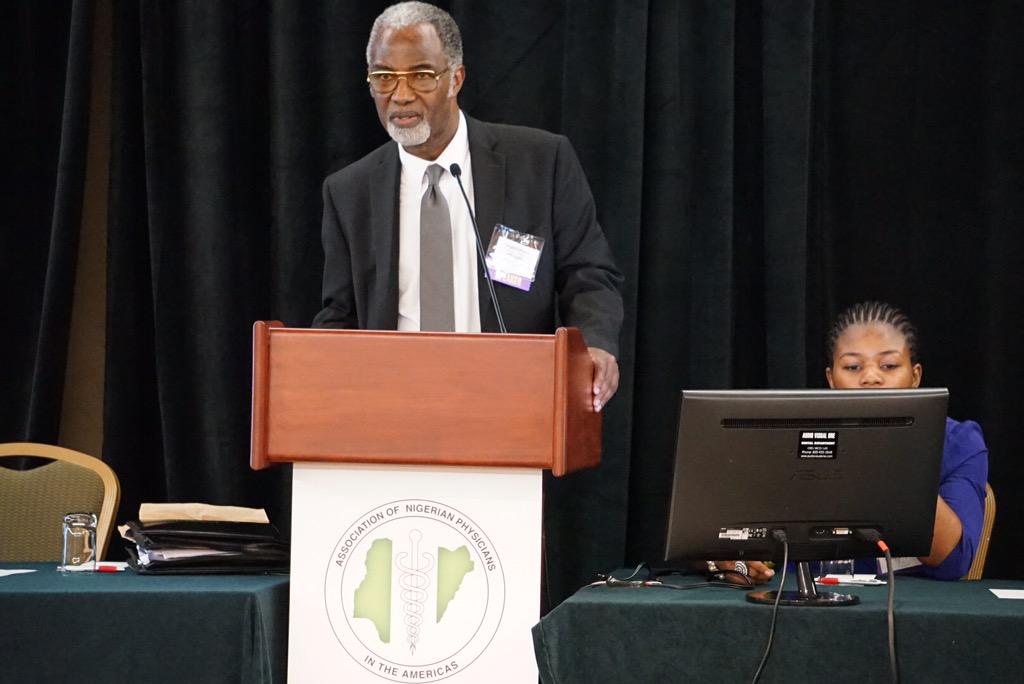
Dr Benjamin Nnamdi Ohiaeri, renowned obstetrician and gynaecologist and founder of First Consultants Medical Centre, Lagos, has died.
Ohiaeri was the chief medical director of the hospital that became a pivotal centre in Nigeria’s battle against the 2014 Ebola outbreak, after Liberian diplomat Patrick Sawyer arrived in Lagos and was admitted to the facility.
His death marks the loss of one of the Nigerian medical professionals whose institution played a crucial role in containing one of the country’s most frightening public health emergencies.
Ohiaeri founded First Consultants Hospital in 1982, initially operating from a relatively small white building on Obalende Road, within walking distance of the Obalende Road entrance to State House, Dodan Barracks.
The hospital later moved into a much larger facility at 16–24 St Gregory’s College Road, Obalende, between 1989 and 1990. The facility, located at the junction of Ikoyi Road and St Gregory’s College Road opposite the Obalende Roundabout, became one of the notable private medical institutions in Lagos.
First Consultants also became associated with prominent births involving members of Nigeria’s political elite.
In 1989, the then First Lady of Nigeria, Mrs Maryam Babangida, gave birth to Halima at the hospital.
In 1998, the then First Lady of Lagos, Mrs Munira Marwa, also gave birth to Imran at First Consultants.
First Consultants was thrust into the international spotlight in July 2014 when Sawyer, a Liberian diplomat, arrived in Lagos on his way to Calabar for an ECOWAS conference.
On July 20, 2014, Sawyer became seriously ill at the airport and was rushed to First Consultants Medical Centre, arriving at about 9pm.
At the time, Sawyer told doctors that he had not been in contact with anyone experiencing symptoms of Ebola. His travel history also did not immediately suggest that he had come directly from Liberia. He initially believed he was suffering from malaria. Tests confirmed the presence of malaria parasites, prompting doctors to commence treatment for the disease. But by the following morning, his condition had deteriorated dramatically.
Sawyer was hemorrhaging, with blood in his urine and blood patches in his eyes. He also developed acute diarrhoea and began vomiting. It was then that the hospital’s chief physician and endocrinologist, Dr Ameyo Adadevoh, became suspicious that he could be suffering from Ebola.
Adadevoh arranged for samples to be tested at the Lagos University Teaching Hospital (LUTH), the nearest facility capable of conducting the required test.
First Consultants also established a crisis committee, with Adadevoh presenting her concerns to the team.
When Adadevoh informed Sawyer that the doctors suspected Ebola, he accepted the information. However, the situation became tense when she told him that he would have to remain in the hospital until the test results were available.
Sawyer insisted that he needed to attend the ECOWAS conference in Calabar and reportedly became unruly, demanding to be released. The situation was further complicated when the Liberian ambassador to Nigeria intervened.
The ambassador reportedly called the hospital and demanded Sawyer’s release, threatening that First Consultants could be accused of kidnapping him and warning that the hospital’s actions could trigger a diplomatic incident.
Ohiaeri eventually took the phone from Adadevoh and made it clear that Sawyer could not be released. His position was that allowing a suspected Ebola patient to leave the hospital and enter the streets of Lagos posed a far greater danger than the threat of a kidnapping allegation or diplomatic dispute.
The situation became even more dangerous as Sawyer allegedly engaged in actions that exposed hospital workers to the virus, including removing his intravenous line and spilling blood, smearing bodily fluids on the drip and asking a member of staff to inspect it. Then came the confirmation that changed everything: the test result showed that Sawyer had Ebola.
Adadevoh immediately contacted officials of the Lagos State Government, which subsequently provided assistance to the hospital.
The Federal Government also moved into action. Then-President Goodluck Jonathan signed an emergency order, while security personnel from the police and military assisted with securing the facility, preventing patients from escaping and facilitating contact tracing.
Ohiaeri also informed the foreign minister about the threats allegedly made by the Liberian ambassador. A strong letter of protest was subsequently sent to the Liberian Government, and the ambassador was recalled. But while Nigeria battled to contain the disease, First Consultants was paying a devastating price. The hospital had to destroy large amounts of equipment, while its operations were suspended for months. Despite the shutdown, Ohiaeri ensured that workers continued receiving their salaries. Even after First Consultants reopened, the fear surrounding Ebola made many patients reluctant to return.
For Ohiaeri, however, the loss could not be measured in equipment or money. He said equipment could be replaced, but the hospital’s greatest loss was its people.
According to Dr Ohiaeri:
“The events of the past months have been very overwhelming to say the least. I have refrained from speaking all these while because I wanted to tell my story in a sequential manner.
“We have lost a lot of things-our laboratory, laundry, nursing room, monitoring line- name it.
“But none of these compares to the human resource losses. When people come here and ask me how much equipment we have lost, I say to them that the most important equipment to me are the people. I recall that some of my colleagues with who we took decisions together are now late. I cannot understand it. I wonder why I am still alive and not dead? I wonder why the dead are not like me?”
“Here in Lagos, we lost seven people as a result of Mr Sawyer’s bio-terrorism and four of such deaths were staff of First Consultant hospital. That means we bore the brunt of the disease for the country. Look at Dr Adadevoh for instance, here is a doctor that use to take care of me because I was hypertensive. She used to give me my drugs weekly but before this Ebola experience, she gave me a dosage that was to last me a month.
“Then I said to her” its like I have graduated now to taking one month dose” and we laughed over it. She had her son in this hospital and I was the one who took the delivery. Look at Dr Abaniwo, who died before Dr Adadevoh. He was with us for four years. He contracted the virus when he went over to intervene when Mr Sawyer was harassing Dr Adadevoh at a time he(Sawyer) had become angry and restive. Evelyn was a widow and a nurse with four children.
“Very humble, loyal and diligent. She was with us when Dr Adadevoh was delivered of her baby. She was the first person who welcomed Sawyer. She was part of this institution. Her death was heartbreaking. It was devastating. Soon after her death, the landlord threw her children out of their home. And we are doing all we can to take care of them. We have got them an accommodation and they have settled in. For Dr Adadevoh, she worked with me for 21years. She was a smart professional who I took as my number 1 person.
“Look at Dr Ada Igonor, who survived the epidemic. I have adopted her as my daughter. She started work here on July 1st 2014, 20 days before the arrival of Mr Sawyer. It was Dr Adadevoh who brought her here. At the isolation center, she was two beds away from Dr Adadevoh. Yet she was the one monitoring everyone in the hospital and giving us reports on hourly basis. That helped us to know what package to bring to them and every line of action to take. Infact, it was right in her arm that our own late Nurse Justina died”
Ohiaeri had previously planned to retire and take up lecturing at a university. He had also hoped that Adadevoh would eventually succeed him as chief medical director of First Consultants. Her death from Ebola shattered those plans.
Several members of the hospital’s staff also died during the outbreak, leaving what Ohiaeri described as losses that could never truly be replaced. The stigma surrounding Ebola was so severe that the family of one deceased staff member was reportedly evicted from their home by their landlord. Ohiaeri intervened by securing another apartment for the family and paying the children’s school fees.
Ohiaeri’s educational and professional links with the United States also proved valuable during the crisis. Having attended university in the US and maintained close relationships with members of the Association of Nigerian Physicians in the Americas (ANPA), he was able to tap into a network of Nigerian medical professionals abroad. Through those contacts, he obtained direct communication with the US Secretary of Health and Human Services and officials of the Centers for Disease Control and Prevention, allowing him to exchange information and experiences about managing the unprecedented crisis.
ANPA also donated protective equipment to First Consultants and the Lagos State Government.
Ohiaeri subsequently established contact with the World Health Organisation, whose experts assisted in decontaminating the hospital. Following the Ebola outbreak, Dr Ohiaeri and First Consultants Medical Centre received widespread praise and several awards for their role in the country’s response.
Yet, despite the recognition, Ohiaeri expressed disappointment that the government did not invite him to formally share his experience of the crisis so that lessons could be drawn from the hospital’s ordeal and preparations made for future outbreaks. His experience during the Ebola crisis became part of Nigeria’s institutional memory of the 2014 outbreak, a period in which quick decisions, medical vigilance and extraordinary personal sacrifices helped prevent a potentially catastrophic spread of the virus.
Ohiaeri’s story was later brought to the big screen in the movie 93 Days, which dramatised Nigeria’s battle against Ebola. American actor Danny Glover portrayed Ohiaeri in the film.
With his death, Nigeria’s medical community has lost not only a respected obstetrician and gynaecologist but also a physician whose hospital becam e one of the most important frontlines in the country’s fight against Ebola.