
NEWS
Nigeria’s Cocoa Exports to U.S. Surge by 650%, Hit $142 Million in 2025

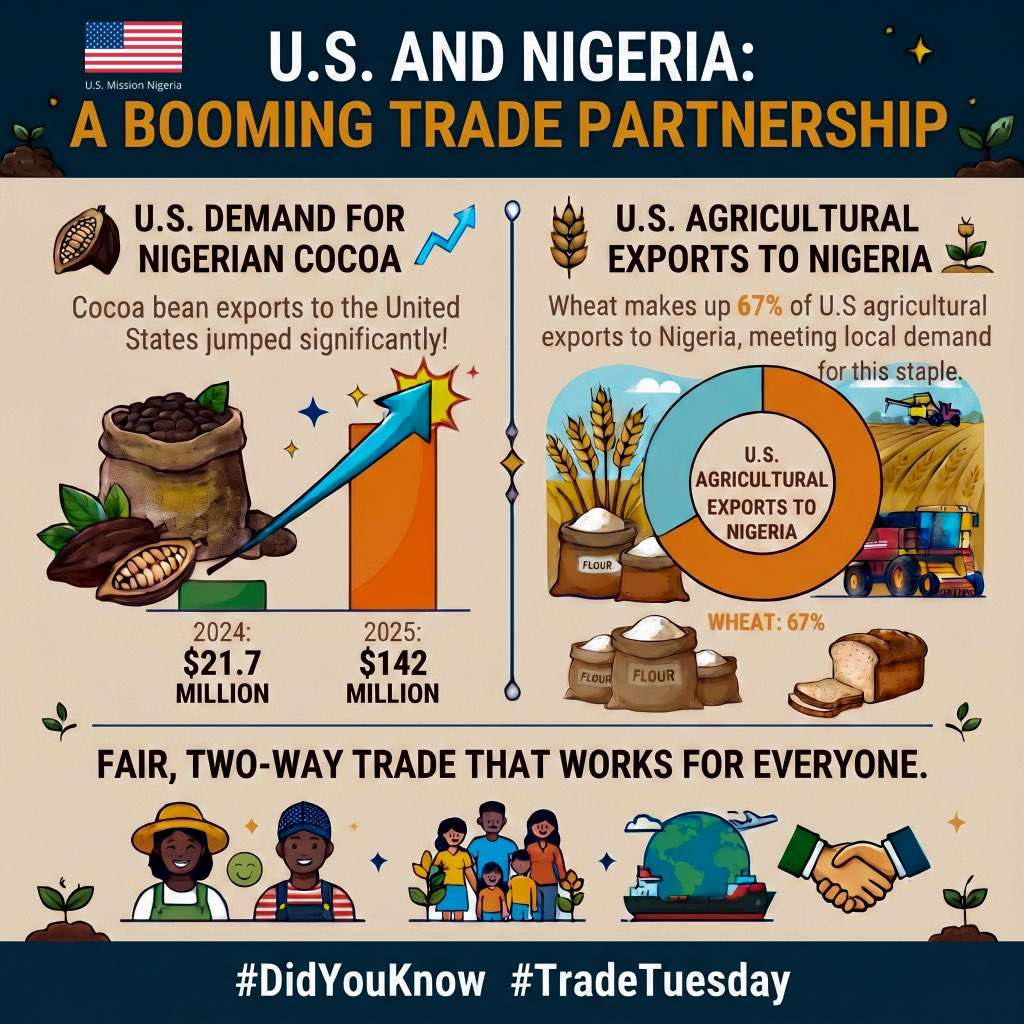
Nigeria’s cocoa industry recorded a remarkable export boom in 2025, as the value of cocoa bean exports to the United States soared from $21.7 million in 2024 to an impressive $142 million, highlighting the growing demand for Nigerian agricultural commodities in the American market.
The significant increase represents a rise of approximately 554%, with export earnings growing by more than six times within a year. The figures point to expanding opportunities for Nigerian cocoa farmers, exporters and agribusiness operators seeking to benefit from stronger international demand.
The development also underscores the potential of Nigeria’s agricultural sector to generate foreign exchange, create employment and diversify the country’s economy beyond its traditional dependence on crude oil.
Cocoa remains one of Nigeria’s important cash crops, with its cultivation supporting farmers and rural communities across several producing states. The surge in exports could provide fresh incentives for increased production, improved processing capacity and greater investment in the cocoa value chain.
Meanwhile, agricultural trade between Nigeria and the United States continues to operate in both directions. Wheat accounts for approximately 67% of U.S. agricultural exports to Nigeria, helping supply the Nigerian market with a commodity widely used in bread production, noodles, pasta and other food products.
The two-way trade relationship highlights the complementary needs of both economies, with Nigeria supplying cocoa to the American market while importing agricultural products that support domestic consumption and food processing.
With cocoa exports reaching $142 million in 2025, the latest figures present an opportunity for Nigeria to strengthen its position in global agricultural markets. Sustaining the momentum, however, will depend on improved farm productivity, access to financing, quality control, modern processing facilities and policies that enable local producers to compete internationally.
For Nigeria, the challenge now is to turn rising international demand into lasting economic gains for farmers, businesses and the wider economy, while building a more competitive and value-added agricultural export sector