
NEWS
Kemi Badenoch Backs Bill to End Benefits for Polygamous and Incestuous Marriages in Britain

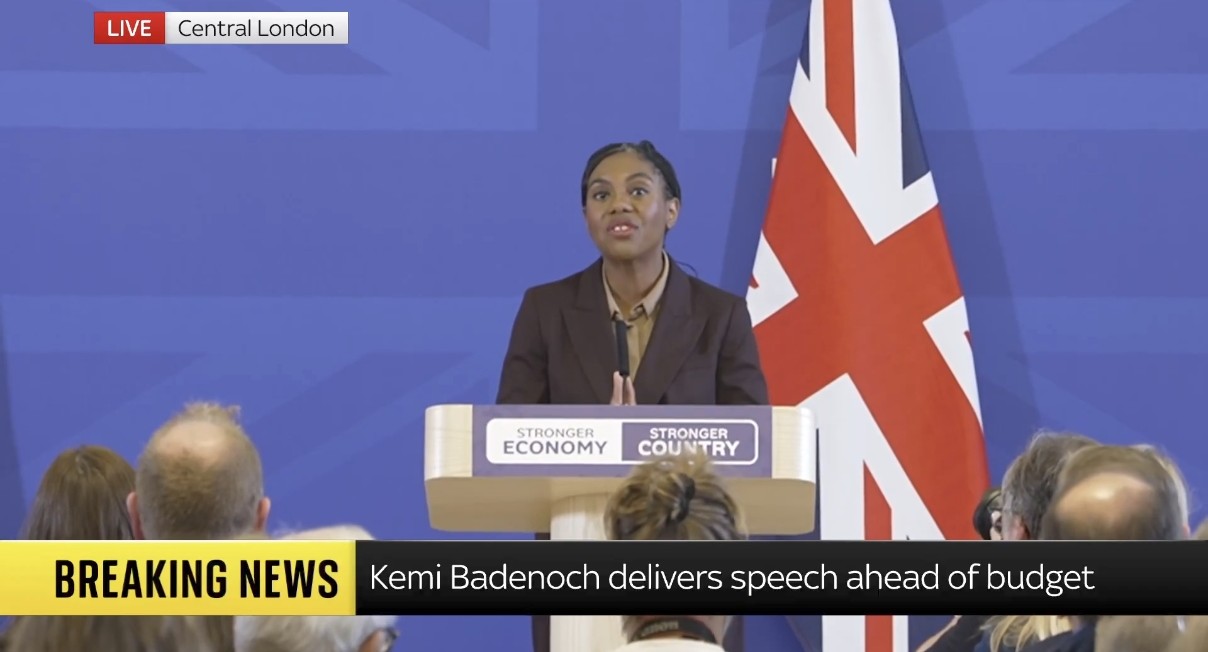
Conservative Party leader, Kemi Badenoch has backed proposed legislation seeking to end certain welfare payments to people in polygamous marriages and marriages involving close relatives, as lawmakers move to address what supporters describe as a loophole in Britain’s benefits system.
The proposed legislation is expected to be presented to the House of Commons on Tuesday through a private member’s bill sponsored by Richard Holden, the Conservative MP for Basildon and Billericay and the party’s shadow transport secretary.
The bill seeks to close a longstanding gap in welfare regulations that allows some additional spouses in polygamous households, as well as people in certain marriages involving close relatives, to qualify for selected legacy benefits despite restrictions on access to newer welfare programmes.
Under the existing system, additional spouses in polygamous marriages are generally not eligible to claim Universal Credit, Britain’s principal means-tested benefit. However, some households that began receiving benefits before 1988 can still qualify for certain older forms of support, including Pension Credit and Housing Benefit.
The rules reportedly permit an additional spouse to receive an extra £125.25 per week, depending on the benefit claimed and the applicable eligibility conditions. The provisions apply to certain families whose benefit claims predate 1988, when polygamous marriages ceased to be recognised for benefits purposes.
According to figures cited by The Times, six polygamous households are currently receiving these benefits, although the proposed reforms could affect the wider legal framework governing eligibility.
An analysis conducted by the Conservatives estimates that a household comprising one husband and four wives, including three additional spouses, could receive a combined total of up to £1,504.40 per week through the additional rates of Housing Benefit and Pension Credit.
Badenoch’s support for the proposal places the issue within the Conservatives’ broader argument for tightening welfare eligibility rules and ensuring that public funds are distributed in accordance with the country’s legal framework.
Holden said the proposed legislation was intended to prevent taxpayers from financing benefit arrangements that he believes should no longer qualify for public support. He argued that families already struggling with the rising cost of living should not have to bear the financial burden of maintaining provisions that permit additional payments to spouses in polygamous households.
“It is outrageous and undermines people’s faith that the laws we pass are abided by,” he said.
Explaining the scope of the bill, Holden said it would remove the additional-spouse provisions and clarify the treatment of certain marriages involving close relatives conducted overseas.
“My bill would end those additional-spouse provisions and put beyond doubt that overseas incestuous marriages, including uncle–niece and aunt–nephew marriages, have no place in our welfare system or society. Contracting a marriage abroad should never be a bypass route around the standards we uphold in Britain.”
The proposed legislation would specifically address marriages between close relatives, including uncle-and-niece unions and marriages between cousins. Under the current framework, the Ministry of Justice has stated that such marriages are “unlikely to be recognised” in certain circumstances, but the existing position does not amount to a blanket prohibition covering every such marriage.
The bill therefore seeks to establish clearer statutory restrictions on the payment of benefits in these circumstances, including where a marriage was contracted in another country.
Holden has also called on Labour MPs to support the proposal, challenging them to justify any opposition to the measure.
He urged lawmakers to back the legislation “or explain to hardworking taxpayers why they refuse to”.
The proposal has received support from other senior Conservative figures, including Helen Whately, the party’s shadow work and pensions secretary, who publicly committed to the policy in May.
However, the Department for Work and Pensions (DWP) has defended the existing arrangements, maintaining that safeguards are already in place to prevent polygamous households from gaining an unfair financial advantage through the benefits system.
In a statement, the department said: “There are robust rules in place which means there is no financial benefit for polygamous households, to ensure fairness across our benefit system.
“Our immigration rules have generally prevented the formation of polygamous households in this country since 1988, and benefit support is only available where the marriage took place in a country where it is legal.
“We believe very few, if any, polygamous households claim pension credit, housing benefit or any benefit support.”
The department’s position highlights a central issue in the debate: while the Conservatives argue that the existing legacy provisions should be removed to eliminate uncertainty and strengthen public confidence in the welfare system, the government maintains that current safeguards already limit the scope for financial benefits from polygamous arrangements.
If introduced and subsequently passed by Parliament, the bill would change the rules governing eligibility for the affected payments. Its progress through the legislative process will determine whether the proposed restrictions become law.
For now, the debate centres on the balance between protecting public funds, maintaining consistent welfare rules and determining how Britain’s benefits system should treat marriages that fall outside the framework recognised by its modern welfare legislation.