
NEWS
Abia State Govt. Debunks Viral Tax Claims, Says No New Tax Hike Introduced Under Otti Administration

...as State Govt Breaks Silence on Viral ₦50,000 Akara Tax Claim
The Abia State Government has moved to dispel what it described as misleading and inaccurate reports circulating on social media over alleged excessive taxation and purported new tax rates being imposed on residents and small-scale businesses across the state.
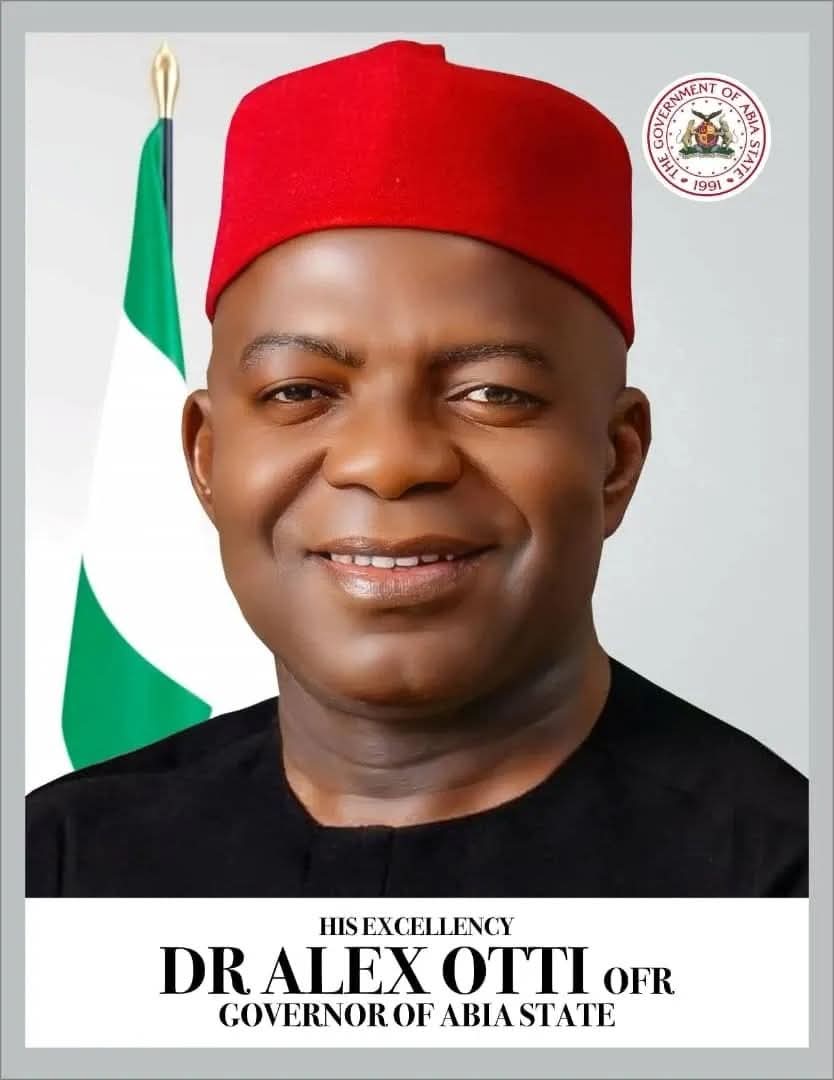
The Commissioner for Information, Prince Okey Kanu, gave the clarification on Monday, September 14, 2026, at Government House, Umuahia, while briefing pressmen on the outcome of this week’s State Executive Council meeting presided over by State Governor, Dr. Alex C. Otti, OFR.
The Commissioner used the opportunity to exonerate the State Government from the alleged excessive tax collection, particularly reports which had gone viral claiming that traders and petty business operators were being subjected to exorbitant taxes by the Abia State Board of Internal Revenue Services.
Prince Kanu explained that the tax rates being referenced in the viral reports were not newly introduced by the present administration, stressing that several of the rates dated back to 2020, when the relevant tax laws were enacted under the previous administration.
“For starters, these rates are not new. Most of the rates are 2020 tax rates that were introduced by the previous government,” Prince Kanu said.
He further clarified that the Abia State Board of Internal Revenue Services (BIR) does not possess the legal authority to arbitrarily increase tax rates without the backing of enabling legislation.
According to him, no new tax increases have been introduced by the administration of Governor Alex Otti, adding that any claim suggesting otherwise should be treated with caution.
“Let me reiterate that the Board of Internal Revenue cannot raise tax rates without the backing of enabling laws. And no such increases have been introduced by the Abia State Government,” the Commissioner affirmed.
The Commissioner also addressed concerns surrounding demand notices issued by the Board of Internal Revenue, explaining that such notices are provided for under the relevant tax laws and form part of the statutory process for tax administration.
He urged taxpayers and residents to comply with legitimate provisions of the applicable tax laws, while assuring that genuine complaints and concerns would be properly examined and addressed by officials of the Board.
Prince Kanu also specifically dismissed as false the widely circulated claim that sellers of akara were being compelled to pay ₦50,000 in taxes.
“This is pure fallacy. Nothing can be further from the truth. Akara sellers don’t pay tax or levies. They pay daily tolls. And none can pay as high as 50,000 Naira,” he said.
He described the allegation as another example of misinformation capable of creating unnecessary tension and confusion among residents, urging members of the public to disregard the claim.
The Commissioner emphasized the importance of obtaining accurate information on taxation from the appropriate government authorities rather than relying on unverified claims circulating on social media platforms.
Also speaking at the briefing, the Chairman of the Abia State Board of Internal Revenue Services, Mr. Uche Elekwachi, further clarified the controversy, saying that rumour mongers were circulating misinformation about the state’s tax system.
He explained that the allegation concerning akara sellers was not supported by the state’s tax laws and that there was no newly created revenue window targeting such petty traders.
“Some rumours are going around that akara sellers are told to be pay 50,000 Naira tax. It is not true.
“There are no rates in there (in the tax laws) and no revenue window there that was started by this government.
“This whole thing has always been in existence. The Abia Internally Generated Revenue Service Law was enacted in 2020 long before this government came onboard, so we need to make that clarification,“ Mr. Elekwachi clarified.
Elekwachi’s explanation reinforced the position of the Commissioner for Information that the present administration did not introduce the tax rates at the centre of the controversy.
The clarification comes amid growing public discussions over taxation, internally generated revenue and the methods being employed to improve revenue collection in Abia State.
The State Government’s position is that while residents and businesses are expected to meet their lawful tax obligations, revenue collection must operate strictly within the framework of existing legislation, with no arbitrary introduction or increase of taxes outside the provisions of the law.
The Special Adviser to the Governor on Internally Generated Revenue, Dr. Emmanue
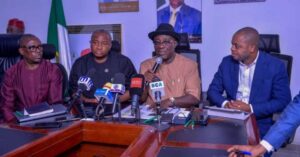 l Okpechi, was also present at the briefing.