
NEWS
“No Government Policy Has Made Anyone Hungry Except Opposition Members” — APC Campaign Council Member, Ayobami Oyalowo Discloses

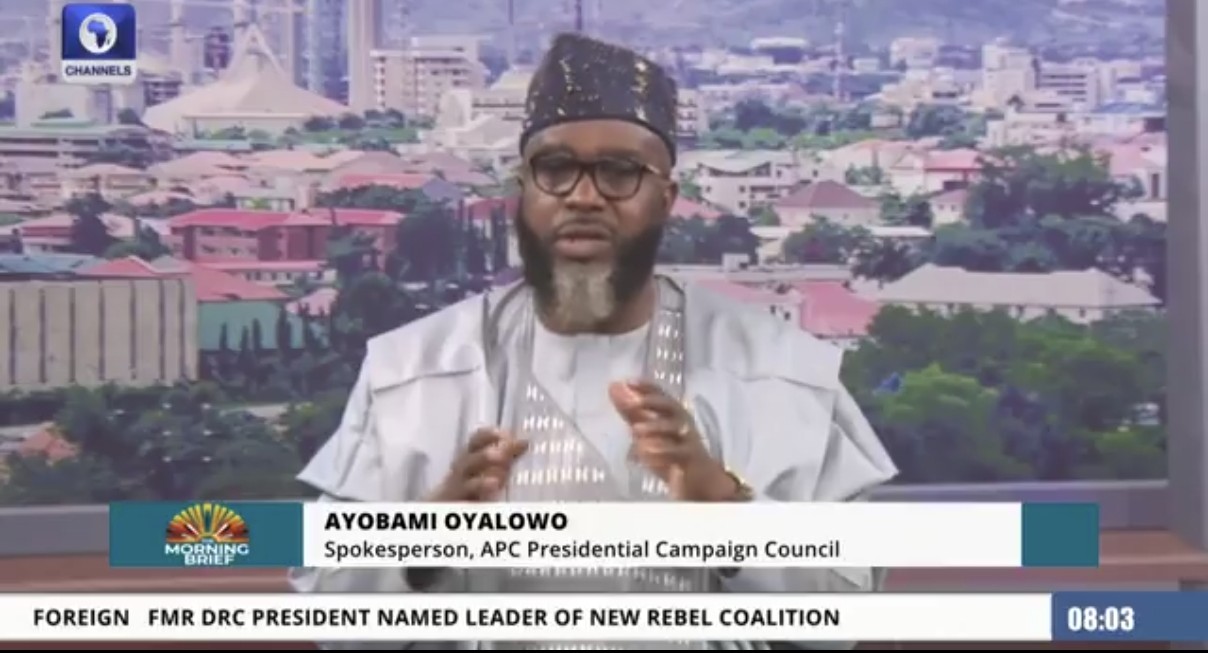
Ayobami Oyalowo, a member of the All Progressives Congress (APC) Presidential Campaign Council (PCC), has sparked debate over Nigeria’s worsening economic hardship after suggesting that hunger among opposition party members is a product of their political choices rather than government policies.
Oyalowo made the controversial remark while appearing on Channels Television’s Morning Brief, where he defended the Federal Government’s policies amid persistent concerns over the rising cost of living and the difficulties faced by millions of Nigerians.
Speaking during the programme, the APC campaign council member declared: “There is no policy of the government that has really made anyone hungry except for opposition party members, who have decided that hunger is going to be their own signature.“
His statement has drawn attention to the increasingly contentious debate over the impact of the Federal Government’s economic policies on ordinary Nigerians, particularly households struggling with food prices, transportation costs and other essential expenses.
Nigeria has faced significant economic pressures in recent years, with many citizens expressing concerns about their purchasing power and ability to meet basic needs. The cost of food and other necessities has remained a major issue for households, traders, workers and business owners across the country.
Against this backdrop, Oyalowo’s comments raise questions about how the government and its supporters interpret the hardship experienced by Nigerians, as well as the extent to which political differences shape public perceptions of the economy.
While supporters of the APC administration may argue that its economic reforms are intended to address longstanding structural challenges and establish a foundation for future growth, critics have repeatedly called for greater relief measures and policies that translate into tangible improvements in living standards.
Oyalowo’s remarks have therefore placed the spotlight on the relationship between political rhetoric and the everyday realities of Nigerians facing economic difficulties.
The controversy also underscores the challenge confronting political leaders and their representatives as they seek to defend government policies in an environment where hunger, affordability and economic security remain central concerns for many citizens.
Ultimately, the debate surrounding the statement highlights a fundamental question in Nigeria’s political discourse: how should the success of government policies be measured, by the intentions behind them, the economic indicators used to assess them, or the lived experiences of the people they are designed to serve?