
NEWS
Daniel Bwala Blames U.S. Restrictions on Supplied Military Equipment for Hampering Nigeria’s Fight Against Terrorism, Calls for Renewed Cooperation with Trump

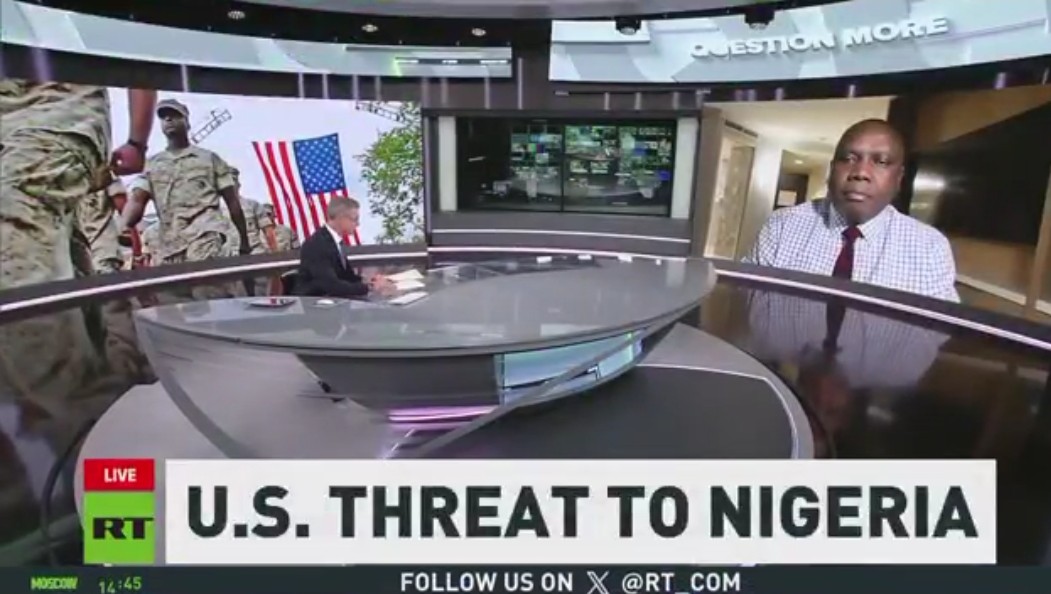
Daniel Bwala, the Special Adviser to President Bola Ahmed Tinubu on Policy Communication, has expressed deep concern over the limitations placed on U.S.-supplied military equipment, describing them as a major obstacle to Nigeria’s ongoing war against terrorism, insurgency, and insecurity.
Speaking during an interview on Russian National TV on November 3, Bwala explained that insurgent groups such as Boko Haram and bandits are exploiting geographical restrictions tied to the use of American-made weapons supplied to Nigeria.
According to him, the Nigerian military’s inability to deploy certain weapons in specified regions has given terrorists a strategic advantage, allowing them to relocate and regroup in areas where such arms are prohibited from being used.
Bwala recalled with appreciation the support Nigeria received from the administration of U.S. President Donald Trump, particularly the approval of the sale of advanced weapons and the iconic Super Tucano aircraft.
“We are thankful to Donald Trump. In his first term, he was the one who reversed the order before him and then signed an executive order, began to sell arms to us. We are able to get Super Tucano and other needed arms,” Bwala said.
However, he lamented that the arms deals came with stringent restrictions that limited their effectiveness in combat operations.
“In his second term, he indicated interest to sell to us but we know the limitation of these ammunitions. We pay off front and it comes with the agreement that we can’t use it in certain geographical locations in the country.
“So it is easy for Boko Haram and insurgents to migrate to a place where you cannot use the arms,” he added.
Bwala therefore called for renewed dialogue with the U.S. President, urging for an expanded framework of military cooperation that would grant Nigeria broader access to critical hardware and operational flexibility.
“We want a broader conversation with Donald Trump that will expand access to some of these military hardware we need in order to put an end to this insecurity,” Bwala emphasized.
His remarks have since ignited widespread debate over the implications of foreign military agreements on Nigeria’s sovereignty and security strategy. Security analysts and policy observers have called for a comprehensive review of existing arms deals to ensure that Nigeria’s counter-terrorism efforts are not hindered by external limitations.
In a related development, it will be recalled that in March 2022, the United States government formally sanctioned six Nigerian nationals found guilty of financing Boko Haram while residing in the United Arab Emirates (UAE).
The U.S. Department of the Treasury’s Office of Foreign Assets Control (OFAC) had announced the designation of these individuals under Executive Order 13224, a legal framework that targets terrorists and those who provide material support or financial aid to terrorism.
Analysts say these developments underscore the complex web of international relations and counter-terrorism policies that continue to shape Nigeria’s internal security landscape, a dynamic that, according to Bwala, calls for more balanced and mutually beneficial coope ration with global powers.