
NEWS
Lesotho Woos Nigerian Investors, Invites Businesses to Relocate From South Africa Amid Xenophobic Attacks

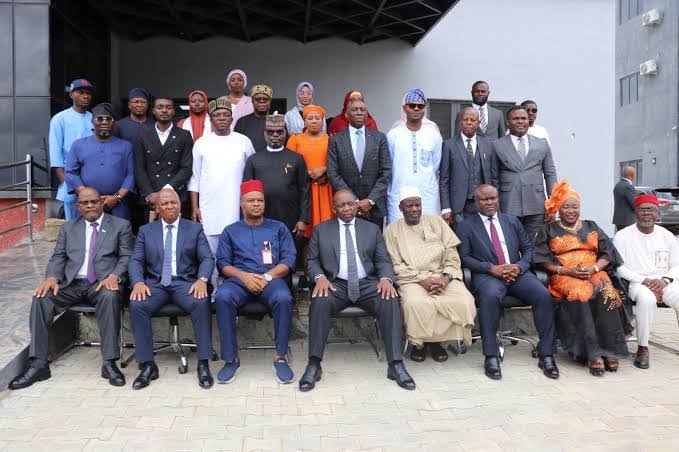
The Kingdom of Lesotho has intensified its drive to attract Nigerian investors, offering assurances of a safe, stable and investor-friendly business environment while encouraging Nigerian-owned businesses operating in neighbouring South Africa to consider relocating.
The Southern African nation said it is ready to provide protection for foreign investors and create a welcoming atmosphere for businesses seeking expansion, particularly those affected by recurring xenophobic attacks in South Africa.
The commitment was made on Wednesday, July 29, 2026, in Abuja during the Nigeria–Lesotho Executive Investment Forum, where Lesotho’s Prime Minister, Sam Matekane, led a high-powered delegation of government officials and business leaders to strengthen economic and commercial ties with Nigeria.
The investment forum, organised by the African Leadership Magazine in partnership with the Abuja Chamber of Commerce and Industry (ACCI), was aimed at promoting trade, investment and private-sector collaboration between the two African nations.
Addressing concerns raised by Nigerian investors about the safety of doing business in Southern Africa, Lesotho’s Minister of Foreign Affairs and International Relations, Limpho Tau, stressed that Lesotho should not be viewed through the same lens as South Africa.
He emphasized that Lesotho is an independent sovereign nation with its own values, culture and approach to foreign investment.
“Lesotho is a sovereign state, an independent state, and our culture is different from any other country,” Tau said.
While acknowledging that Lesotho has also experienced the indirect effects of xenophobic violence within the region, he maintained that the country’s government remains committed to safeguarding foreign businesses and investments.
“Lesotho is also a victim of xenophobic attacks. We are ready to accept any Nigerian investment in South Africa that wants to relocate,” he added.
Earlier, Prime Minister Matekane urged African nations to strengthen intra-African trade and investment, insisting that the continent’s long-term economic growth depends on stronger cooperation among governments, entrepreneurs and the private sector.
He described the Abuja visit as a strategic mission to deepen bilateral economic relations while showcasing Lesotho as a prime destination for investment, innovation and enterprise.
“We have come to Abuja to establish new relationships, deepen existing partnerships and present Lesotho as a destination for investment, innovation and enterprise,” he said.
Matekane reaffirmed Lesotho’s commitment to the successful implementation of the African Continental Free Trade Area (AfCFTA), noting that stronger collaboration among African governments and businesses is essential to unlocking the continent’s vast economic potential.
He explained that his administration is implementing reforms designed to build an inclusive, productive and private sector-driven economy through industrialisation, infrastructure development, improved competitiveness and job creation, particularly for women and young people.
The Prime Minister also praised the administration of President Bola Ahmed Tinubu, commending the economic reforms being implemented in Nigeria and their contribution to strengthening cooperation and economic transformation across Africa.
Also speaking, Lesotho’s Minister of Trade, Industry and Business Development, Motlatsi Maqelepo, described the investment mission as a deliberate effort to establish stronger commercial relationships with Africa’s largest economy.
According to him, Prime Minister Matekane, who built a successful career in business before assuming office, routinely travels with private-sector representatives to market investment opportunities in Lesotho.
“We know very well that Nigeria is one of the powerhouses of Africa in terms of economy and population. Nigerian businesses have advanced significantly, and we came here to establish business linkages with the Abuja Chamber of Commerce and Industry and Nigeria as a whole,” Maqelepo said.
He noted that businesses investing in Lesotho would enjoy access to the broader Southern African market while taking advantage of opportunities created under the African Continental Free Trade Area.
Maqelepo identified renewable energy, data centres, textiles, apparel manufacturing and agribusiness as key sectors where Nigerian investors can explore opportunities.
On his part, President of the Abuja Chamber of Commerce and Industry, Chief Emeka Obegolu, represented by the chamber’s second deputy president, Dr. Aliyu Idi Hong, said Lesotho has demonstrated a genuine commitment to welcoming Nigerian businesses.
He observed that, unlike South Africa, where Nigerians have repeatedly been victims of xenophobic attacks, there has never been any reported case of Nigerians being targeted in Lesotho.
“While some people are chasing us away, others are trying to befriend us. That is a very positive sign.
“There are Nigerians who have been doing business in Lesotho for many years, and we have never had any incident involving them.
“In South Africa, unfortunately, these attacks have happened repeatedly. That tells you the cultures of the two countries are different,” he said.
Hong added that the direct involvement of Prime Minister Matekane in engaging Nigerian investors demonstrates Lesotho’s seriousness about attracting foreign investment and building long-term economic partnerships.
Publisher of African Leadership Magazine, Ken Giami, also highlighted the importance of deeper economic cooperation among African countries, noting that sustainable development on the continent depends on increased investment and stronger partnerships.
He encouraged participants at the investment forum to use the platform to establish lasting business relationships capable of delivering tangible economic growth across Africa.
“Nigeria offers one of Africa’s largest consumer markets, while Lesotho provides strategic opportunities for investment. Together, both countries can build partnerships that promote prosperity across the continent,” he said.