
NEWS
Meloni Announces New School Rules, Caps Non-Italian-Speaking Students at 30% and Moves Against Face-Covering Veils

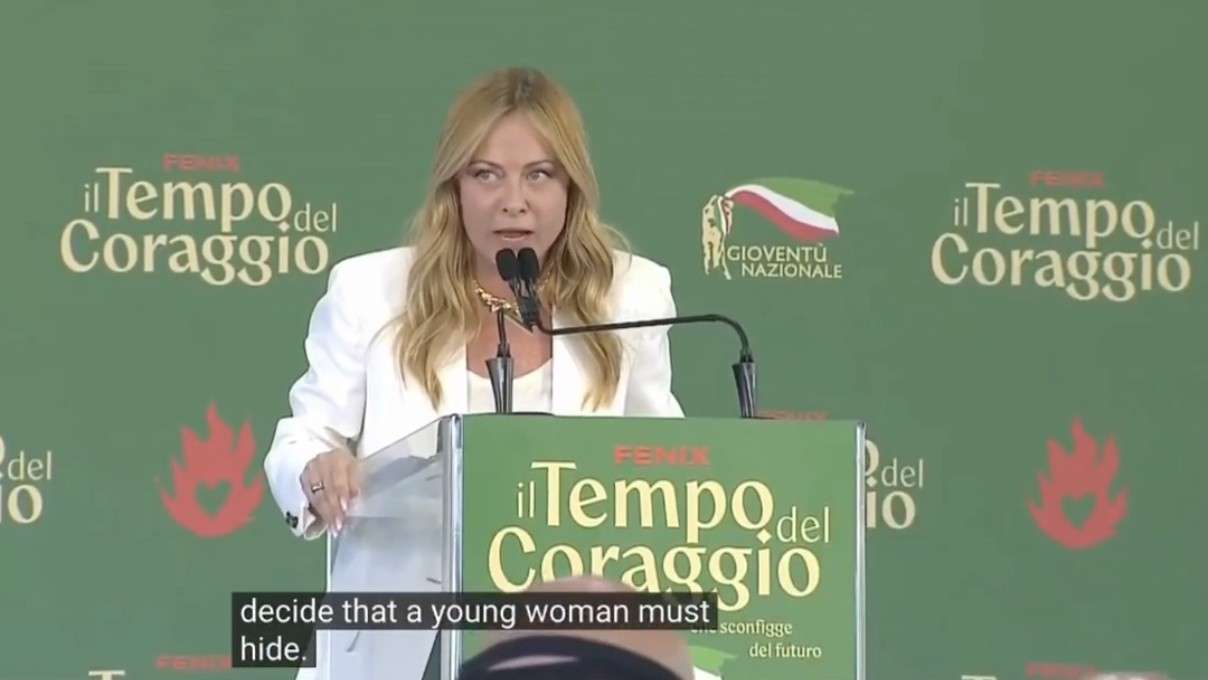
Italian Prime Minister, Giorgia Meloni has announced a new set of measures targeting integration and language support in the country’s schools, including a 30 percent limit on students with insufficient Italian-language proficiency in classrooms.
Meloni made the announcement after the Council of Ministers approved a decree on schools, describing the measures as part of her government’s broader approach to integration, equal opportunity and the preservation of common rules within the education system.
Under the new framework, schools will be required to ensure that classrooms do not become heavily concentrated with students who have inadequate knowledge of the Italian language. The government also plans to introduce additional tools and support mechanisms designed to help students learn Italian and participate more effectively in school life.
Another major element of the announcement is a prohibition on the wearing of burqas and niqabs in schools, bringing restrictions on face-covering garments into the government’s latest education measures.
Meloni said the objective was not to create divisions among students but to prevent what she described as the development of isolated or segregated classroom environments.
“Today we approved in the Council of Ministers the decree on schools.
“A limit of 30% in classrooms for students who do not adequately know Italian, plus tools to learn our language and a stop to burqas and niqabs in school.
“Tools of common sense that do not divide, but truly help to integrate, avoiding ghetto classes and giving all students the same opportunities.
“This is the direction we want to continue to follow: a school that integrates without giving up on rules, that supports those who have more difficulties and that puts everyone in a position to start from the same point.”
The announcement places language acquisition at the centre of the government’s approach, with the stated aim of ensuring that students who arrive in Italy without sufficient Italian-language skills receive support while also preventing excessive concentration of such students in particular classrooms.
The measures are likely to fuel further debate over immigration, integration, religious expression and the role of national language and cultural norms in Italy’s public education system.
Meloni’s government has increasingly framed integration as a process that should combine access to opportunities with adherence to common rules. The latest school decree reflects that approach by combining language assistance with restrictions on face-covering garments in educational settings.