
NEWS
Middle East on the Brink As U.S.–Israeli “Epic Fury” and “Roaring Lion” Air Campaign Triggers Iran’s “Truthful Promise 4” Retaliation as IRGC Warns of Unseen Weapons

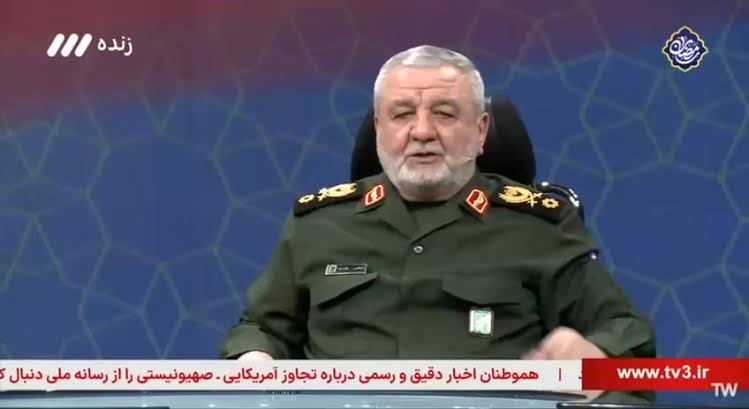
The Middle East is sliding deeper into uncertainty as coordinated U.S.–Israeli air operations continue to target Iranian military, nuclear, and strategic leadership sites, prompting fierce retaliation and escalating rhetoric from Tehran’s powerful security establishment.
The joint offensive, code-named Epic Fury by Washington and Roaring Lion by Tel Aviv, has reportedly focused on crippling Iran’s missile stockpiles, nuclear infrastructure, and command structures. The strikes, described by U.S. officials as part of a carefully planned, multi-day campaign, have ignited one of the most volatile confrontations in recent regional history.
Amid sustained bombardments, Iran’s Islamic Revolutionary Guard Corps, known as the Islamic Revolutionary Guard Corps (IRGC), has adopted a tone of open defiance.
According to regional media reports, Brigadier General Sardar Jabbari, a senior IRGC adviser, issued a stern warning directed at U.S. President Donald Trump, signaling that Iran’s initial retaliation was only the beginning.
Iranian outlets reported that the first wave of missile and drone strikes involved older systems from existing stockpiles, suggesting Tehran deliberately withheld more advanced capabilities. The statement implied that more sophisticated weapons could soon be deployed if hostilities persist. Iranian officials have branded their counteroffensive as Truthful Promise 4, portraying it as a decisive and crushing response designed to deter further aggression.
Iran’s retaliatory actions reportedly targeted U.S. military installations across the Gulf and the broader Middle East. Sites in Bahrain, including the headquarters of the U.S. Fifth Fleet, as well as bases in Qatar, the United Arab Emirates, Kuwait, and Jordan, were said to be among the locations under threat. Military facilities in Israel were also reportedly targeted in the barrage.
Explosions were reported in Tehran, with smoke rising near key government and military installations. Gulf states hosting U.S. assets activated air defense systems to intercept incoming threats, underscoring the widening geographical scope of the confrontation. President Trump confirmed that major combat operations were underway, emphasizing the objective of dismantling Iran’s missile arsenal and nuclear framework. He described the campaign as the result of months of preparation and indicated that strikes could continue for several days.
Beyond the military dimension, reports of civilian casualties have heightened global concern. Unverified accounts indicated that strikes in southern Iran hit a girls’ school, resulting in dozens of deaths. Independent confirmation of casualty figures remains elusive amid the fog of war.
Global markets reacted swiftly. Oil prices surged sharply on fears that escalating hostilities could disrupt traffic through the strategically critical Strait of Hormuz, a vital artery for global energy supplies. Analysts warn that any sustained disruption could trigger broader economic instability far beyond the region.
Iran’s Foreign Ministry condemned the strikes as unlawful aggression and a violation of international norms, while IRGC sources reiterated readiness for a prolonged conflict. Tehran’s leadership appears determined to project resilience, framing the confrontation as a test of national sovereignty.
Particularly alarming is the suggestion that Iran may unveil previously unseen weapons systems if hostilities intensify. Military analysts speculate that such capabilities could include hypersonic missiles, advanced long-range drones, or other strategic systems developed in recent years.
As both sides trade blows and rhetoric hardens, uncertainty clouds the fate of high-ranking officials and the true scale of damage inflicted. Casualty claims remain contested, and independent verification is scarce. With neither side signaling retreat, the region stands at a precarious crossroads, and what began as targeted military operations now threatens to spiral into a broader and more devastating regional conflict with global consequences hanging in the balance.