
NEWS
“Our People Will No Longer Be Like Customers“ — Abia Health Commissioner Prof. Ogbonnaya Uche Declares, as State Launches Community Health Oversight Team in Isuikwuato

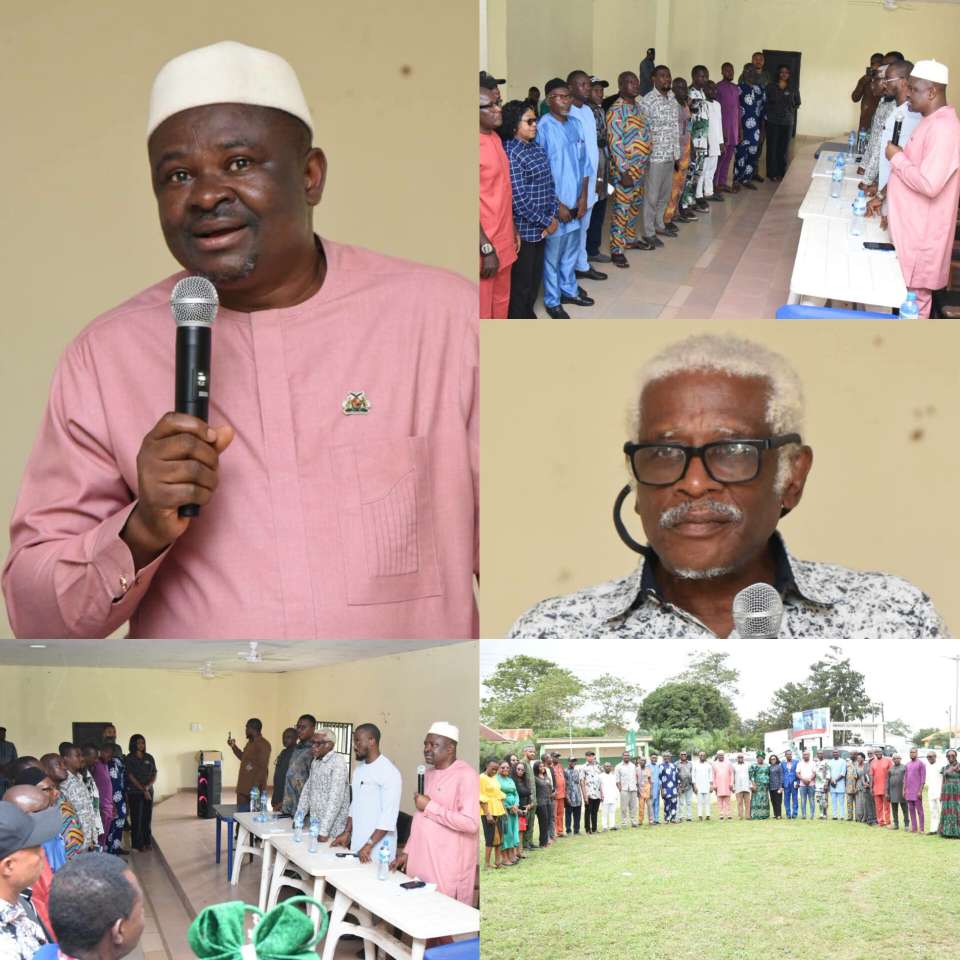
The Abia State Government has taken another major step towards strengthening primary healthcare delivery at the grassroots with the inauguration of the Strategic Community Health Oversight Team (SCHOT) in Isuikwuato Local Government Area.
The initiative is designed to deepen community participation in healthcare governance while ensuring that government investments in primary healthcare facilities are protected, properly utilised and sustained for the benefit of residents.
Inaugurating the Strategic Community Health Oversight Team on Tuesday, the Abia State Commissioner for Health, Prof. Ogbonnaya Uche, said the initiative was introduced to make communities active stakeholders in the development and management of healthcare facilities in their respective areas.
According to him, communities should not merely receive healthcare infrastructure provided by government but must also play a critical role in monitoring the facilities, ensuring that health workers perform their duties and promptly drawing government’s attention to challenges affecting healthcare delivery.
Prof. Uche said Governor Alex Otti had continued to attach great importance to the health and wellbeing of residents, noting that the Governor was particularly concerned about ensuring that government investments in the sector directly benefit ordinary people across the state.
“Anything that has to do with the health of Ndi Abia, he doesn’t joke with it.
“He can call you at any time to discuss the matter and demand that something should be done immediately,” Prof. Uche said.
The Commissioner explained that SCHOT would serve as an important link between communities and government, particularly in monitoring the condition and functionality of primary healthcare centres.
He said members of the team would be expected to monitor attendance of healthcare workers, protect public health facilities against vandalism and neglect, identify emerging challenges and communicate such issues to the appropriate authorities.
Uche stressed that government could construct modern healthcare facilities and equip them with the necessary infrastructure, but such investments could fail to achieve their intended purpose if communities did not take ownership of them.
“We want you to take ownership of the facility. Make sure that the people who are posted there to work come to work.
“If you see something not going on right, report it. We want to be able to monitor what is going on,” the commissioner said.
The Commissioner said the SCHOT initiative was part of the broader healthcare reforms being implemented by the Otti administration under its commitment to improving access to quality and affordable healthcare across Abia.
He disclosed that the government was undertaking the renovation, re-equipping and staffing of 200 primary healthcare centres spread across the state’s 184 wards.
The strategy, he explained, was aimed at bringing quality healthcare closer to residents and reducing the pressure on major hospitals by ensuring that medical conditions that could be handled at the primary healthcare level were treated within communities.
Beyond infrastructure, Prof. Uche called for a renewed sense of collective responsibility among residents, recalling an example of a community where residents took responsibility for protecting a government-built health facility.
He urged the people of Isuikwuato to embrace a similar culture of ownership by treating healthcare centres as valuable community assets rather than government property that could be neglected.
The Commissioner also highlighted other components of the administration’s Roadmap to Health Equity, including the state health insurance scheme, free medical outreaches, partnerships with international health organisations and the digital health programme.
He explained that the health insurance scheme was aimed at reducing the financial burden of medical treatment and making healthcare more accessible to residents, while encouraging people to seek treatment at recognised health facilities rather than depending on unregulated alternatives.
According to him, the state was also exploring digital healthcare solutions that could enable residents in rural communities to access the expertise of Abia medical professionals living and working in countries such as the United States, Canada and the United Kingdom.
Prof. Uche said the ongoing reforms were already attracting positive attention, citing a recent assessment by Phillips Consulting which, according to him, ranked Abia among Nigeria’s leading states in various areas of governance, including healthcare affordability and quality.
He described the establishment of SCHOT as a deliberate move to make residents active participants in the governance of the health sector.
“Our people will no longer be like customers. We are now putting them at the centre of governance of healthcare,” he said.
The Commissioner urged members of the newly inaugurated team to regard their appointment as a responsibility to serve their communities and contribute meaningfully to the administration’s efforts to build a healthier Abia.
He said the success of the initiative would depend largely on cooperation, accountability, innovation and the willingness of members to promptly identify and report challenges.
“We are in a new Abia. This is the new Abia where participatory leadership is what we are looking for. Everyone of us is part of the leadership,” he said.
Uche further urged the team members to work collectively, provide constructive ideas and ensure that challenges affecting healthcare delivery were brought to the attention of government without delay.
“We are as strong as our weakest link.
“So please don’t be the weak link.
“Provide strength, courage, innovation and ideas that will help us to make this a success,” Prof. Uche concluded.
Earlier, the Abia State Consultant on Strategic Community Health Oversight, Prof. Kanu Nkanginieme, explained that the establishment of SCHOT was necessary to ensure that the ongoing healthcare reforms were preserved and sustained at the community level.
Prof. Nkanginieme noted that government projects could lose their value if there was no effective community oversight, stressing that the involvement of residents was critical to protecting healthcare infrastructure and ensuring that facilities remained functional.
He said the initiative was driven by the need to promote community ownership of government projects, adding that the teams were expected to ensure that healthcare facilities in their respective communities were protected, maintained and kept in good condition.
The consultant also emphasised the responsibilities of Presidents General of communities, saying they were expected to provide regular updates on the condition of primary healthcare centres in their areas and report the progress of ongoing projects.
He noted that such feedback would enable government to identify problems early and respond appropriately before they affected the quality of healthcare services available to residents.
In her vote of thanks, the Health Authority Secretary (HAS), Isuikwuato, Mrs Nwogu Patricia, expressed appreciation to Governor Alex Otti for what she described as significant reforms in the state’s healthcare sector.
She expressed optimism that with the inauguration of the Strategic Community Health Oversight Team, primary healthcare centres and other government projects across Isuikwuato would receive closer attention, better protection and improved community support.
The inauguration therefore marks another step in Abia’s push to move healthcare governance beyond the provision of infrastructure to a model in which communities actively participa

 te in monitoring, protecting and sustaining public health investments.