
DEVELOPMENT
Russia Eyes Nuclear Power Plant on the Moon as It Pushes for Long-Term Lunar Presence with China

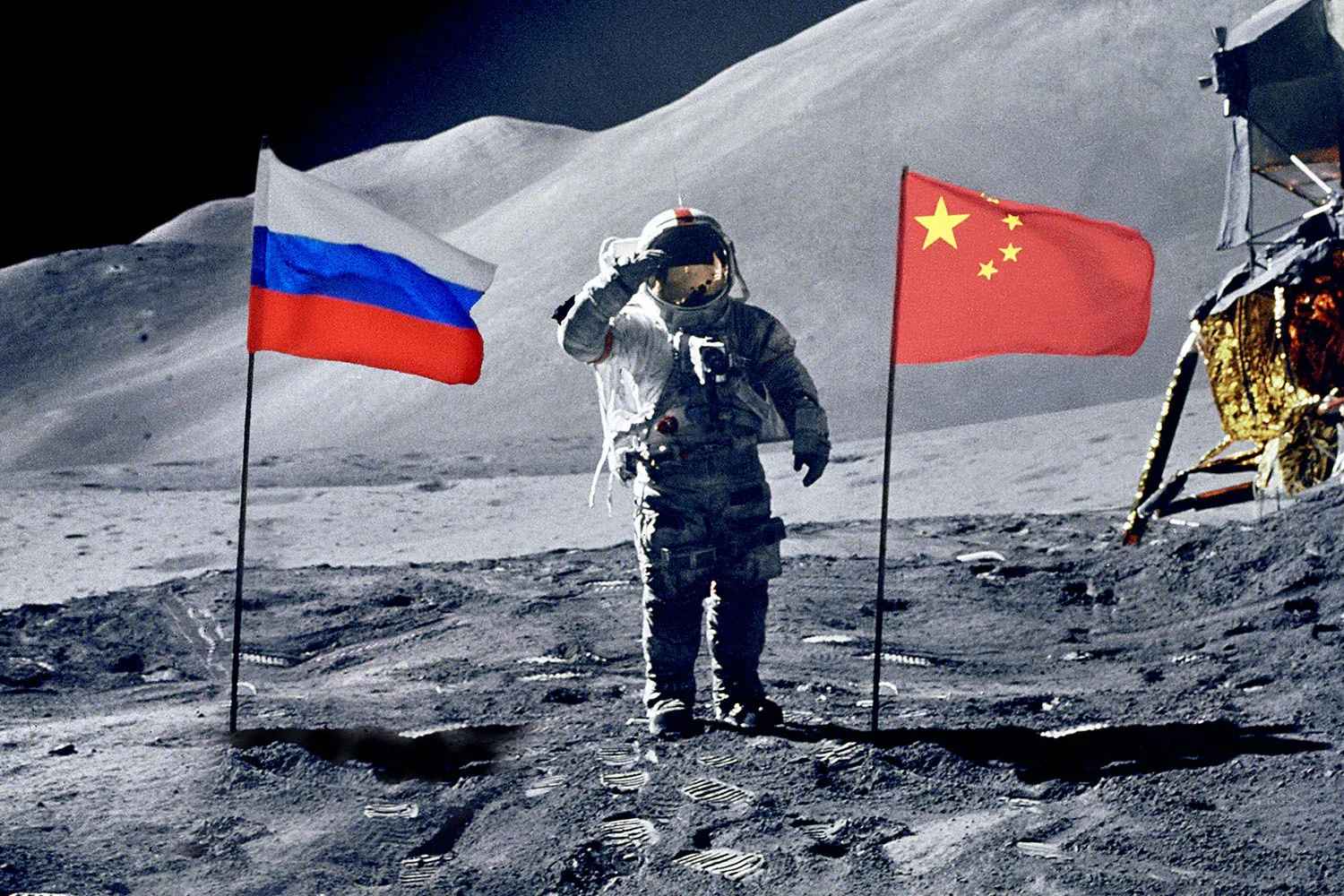
Russia is reportedly planning to establish a nuclear power plant on the moon within the next decade, marking one of its most ambitious space projects since the Cold War era and signalling a renewed push to reclaim relevance in the rapidly intensifying global race for lunar exploration.
The project is designed to provide a stable energy supply for Russia’s expanding lunar space programme as well as a joint research outpost being developed in partnership with China. As global powers increasingly turn their attention back to the moon, viewed as a strategic gateway for deeper space exploration, Moscow appears determined not to be left behind.
Russia’s history in space exploration is storied and symbolic. The country etched its name into global history in 1961 when Yuri Gagarin became the first human to journey into space. That achievement positioned the former Soviet Union as a dominant force beyond Earth’s atmosphere.
However, that dominance has steadily declined over the past few decades, with the United States regaining the lead and China rapidly emerging as a formidable space power.
In recent years, Russia’s lunar ambitions have faced notable challenges. In August 2023, its uncrewed Luna-25 mission ended in failure after crashing during a landing attempt, a setback that underscored the technical and financial pressures confronting the country’s space sector. At the same time, the global launch industry, once a Russian stronghold has been transformed by private-sector innovation, particularly through companies led by figures such as Elon Musk, intensifying competition and raising the bar for space missions.
Despite these challenges, Russia’s state space corporation, Roscosmos, has outlined a bold roadmap. In a statement, the agency confirmed plans to build a lunar power plant by 2036, noting that it had already signed a contract with the Lavochkin Association aerospace company to carry out the project.
According to Roscosmos, the facility would serve as the backbone of Russia’s lunar activities, providing power for rovers, a scientific observatory and the infrastructure of the joint Russian-Chinese International Lunar Research Station.
“The project is an important step towards the creation of a permanently functioning scientific lunar station and the transition from one-time missions to a long-term lunar exploration program,” Roscosmos said.
While Roscosmos did not explicitly describe the proposed facility as nuclear, the involvement of key institutions has fuelled strong indications that nuclear technology will be central to the project. The agency disclosed that participants include Russia’s state nuclear corporation Rosatom and the Kurchatov Institute, the country’s leading nuclear research body, suggesting that advanced nuclear power systems are under consideration.
Further reinforcing this direction, the head of Roscosmos, Dmitry Bakanov, said in June that one of the corporation’s strategic objectives was to place a nuclear power plant on the moon. He also noted that Russia intends to expand its planetary ambitions beyond the moon, including renewed exploration of Venus, often referred to as Earth’s “sister” planet because of its similar size and structure.
Beyond its role in space exploration, the moon itself remains vital to life on Earth. Located about 384,400 kilometres (238,855 miles) away, it helps stabilise Earth’s axial wobble, contributing to a more consistent climate over long periods. The moon is also responsible for ocean tides, playing a critical role in marine ecosystems.
As Russia and China advance their lunar partnership, the proposed power plant represents more than just an engineering project, it signals a strategic effort to secure a sustained human and robotic presence on the moon, potentially reshaping the balance of power in the next era of space exploration.