
NEWS
Senator Ndume Advocates Part-Time National Assembly, Says Lawmakers Should Be Paid Per Sitting

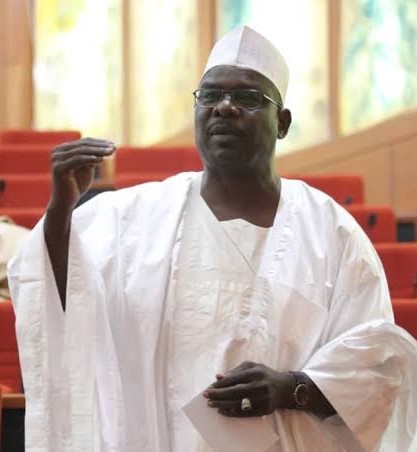
The lawmaker representing Borno South Senatorial District, Senator Ali Ndume, has advocated for a major reform of Nigeria’s legislative system, proposing that members of the National Assembly should serve on a part-time basis and be remunerated only for the days they participate in official legislative duties.
Ndume argued that the current structure of the National Assembly does not require lawmakers to report to work every day, noting that legislative activities are largely confined to plenary sessions and committee meetings. He maintained that the existing arrangement should be reviewed to reflect the actual pattern of legislative work and promote greater accountability in the use of public funds.
The senator stressed that lawmakers should only receive payments when they are actively engaged in official sittings, insisting that such a system would encourage efficiency while reducing the cost of governance.
“To me, I said it, what are we doing? We have been on recess for several times.
“Let us be paid by sitting. If you sit, you get paid. If you are not sitting, you are not paid.
“And to me, we can even make the National Assembly to work part time. On Wednesday, we all assembled for an emergency meeting for this year; important national issues, that is the state policing even though I have reservations as to the speed and the way they are doing it.
“Senate is a committee of elders. You just don’t come one day, sit down because the President wants state police, you just pass it overnight.
“You are supposed to sit down, deliberate on it and get the input. We have passed the bill. Has the state police taken off today?” Sen. Ndume stated.
Ndume also used the opportunity to express concerns over the manner in which the proposed state police initiative is being handled. While acknowledging its importance as a national issue, he questioned the speed of the legislative process, arguing that constitutional matters of such magnitude deserve extensive consultations, careful deliberation, and broad stakeholder engagement before final approval.
According to him, the Senate should remain a chamber where critical national issues are subjected to rigorous debate rather than being expedited to satisfy political expectations. He maintained that the effectiveness of legislation should take precedence over the speed of its passage, emphasizing that laws intended to reshape the country’s security architecture must be thoroughly scrutinized before implementation.
The senator’s remarks have further fueled the ongoing national conversation on the cost of governance, legislative reforms, and the need to improve accountability and efficiency within Nigeria’s democratic institutions.