
NEWS
U.S Rep., Riley M. Moore Clashes with Nigeria Senator Rabiu Kwankwaso over Trump’s ‘Christian Genocide’ Allegation and Nigeria’s Religious Freedom Record

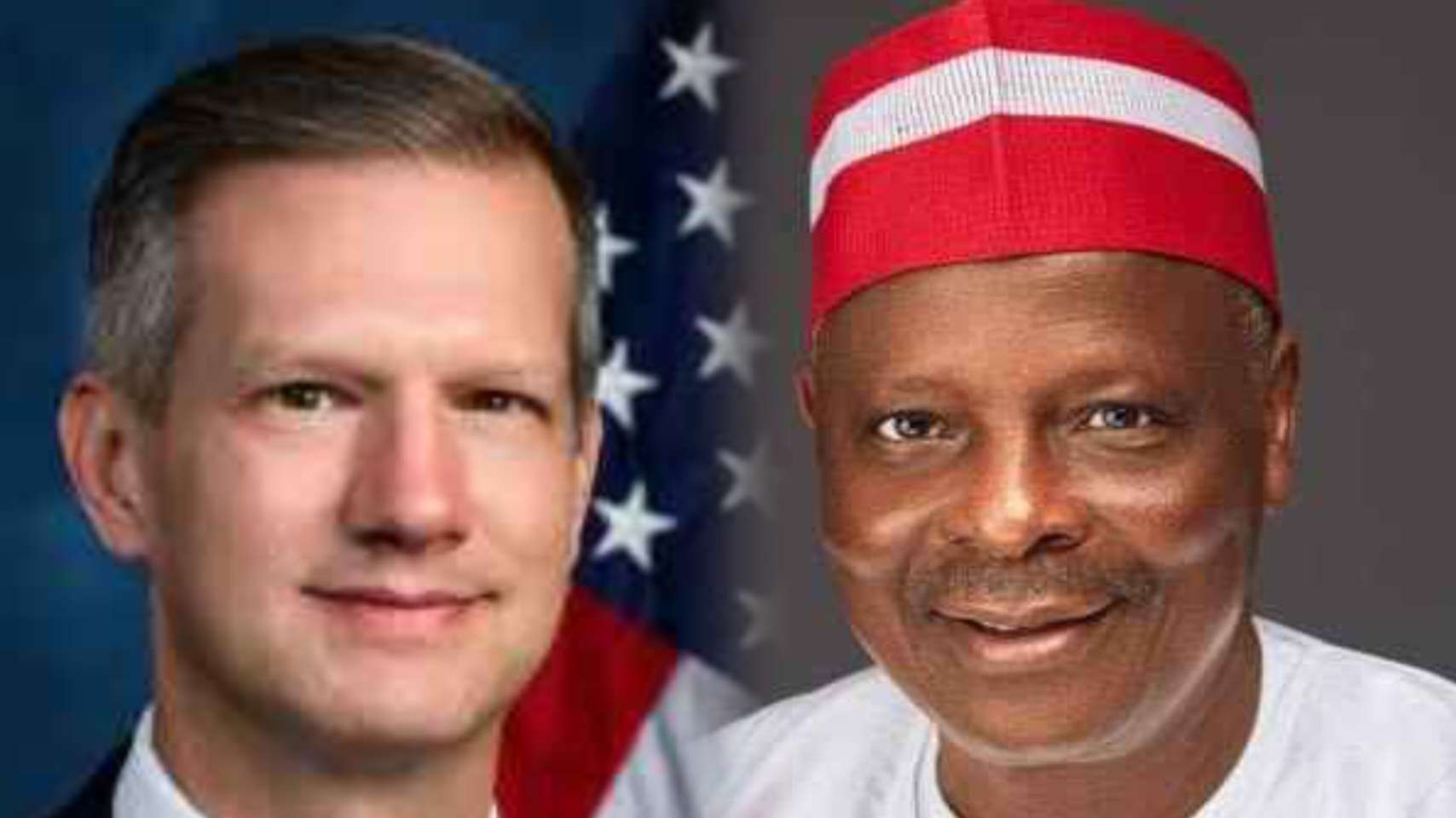
A heated online confrontation erupted after U.S. Representative Riley M. Moore sharply responded to Nigerian Senator Rabiu Musa Kwankwaso’s remarks concerning former U.S. President Donald Trump’s warning about Nigeria’s religious freedom status.
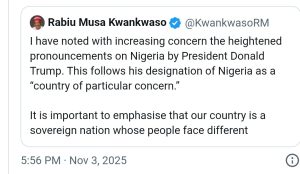
Senator Kwankwaso, a former governor of Kano State and presidential candidate, had earlier issued a statement expressing concern over Trump’s decision to designate Nigeria as a “country of particular concern” over alleged religious persecution.
In his statement, Kwankwaso urged the United States to support Nigeria through advanced security technology instead of issuing threats that could exacerbate internal divisions.
He stated:
“I have noted with increasing concern the heightened pronouncements on Nigeria by President Donald Trump. This follows his designation of Nigeria as a ‘country of particular concern’.”
Kwankwaso emphasized that Nigeria remained a sovereign nation grappling with threats from outlaw groups that do not discriminate based on religion, ethnicity, or politics. He called on Nigerians to remain united and encouraged the federal government to appoint special envoys and permanent ambassadors to strengthen diplomatic engagement with the U.S. government.
“To my fellow countrymen, this is an important moment where we should emphasise unity of belonging over division. God bless Nigeria,” he concluded.
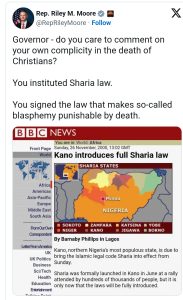
However, in a swift and fiery reaction on X (formerly Twitter), U.S. Representative Moore accused Senator Kwankwaso of hypocrisy, citing his administration’s role in enforcing Sharia law in Kano State during his tenure as governor.
Moore wrote:
“Governor – do you care to comment on your own complicity in the death of Christians? You instituted Sharia law. You signed the law that makes so-called blasphemy punishable by death.”
His response directly tied Kwankwaso’s past governance decisions to the current debate over religious freedom and human rights in Nigeria, particularly in northern states where Sharia law remains in force.
The exchange has reignited global attention on Nigeria’s religious freedom record and the broader implications of Trump’s recent remarks. The U.S. President’s decision to list Nigeria among countries of concern has divided opinion with some Nigerians welcoming international scrutiny as a step toward justice, while others, like Kwankwaso, caution that such external pressure may further destabilize the fragile peace within the country.
Meanwhile, reports indicate that 12 governors from northern Nigeria may soon face sanctions following renewed efforts by the U.S. Congress to hold state officials accountable for alleged religious persecution.
This development followed Trump’s post on his Truth Social platform, where he decried the reported killings of Christians in Nigeria, describing the situation as “Christian genocide.” He further called on members of Congress and the House Appropriations Committee to investigate the allegations and submit a report to him.
As diplomatic tensions mount, both local and international observers are closely monitoring how these exchanges involving a former U.S. President, a sitting U.S. Representative, and a prominent Nigerian senator could shape future U.S.-Nigeria relations and redefine the global conversation on religious freedom in Af
 rica’s most populous nation.