
NEWS
UN Mission Raises War Crimes Concerns Over US Strikes That Killed 178 Civilians in Iran

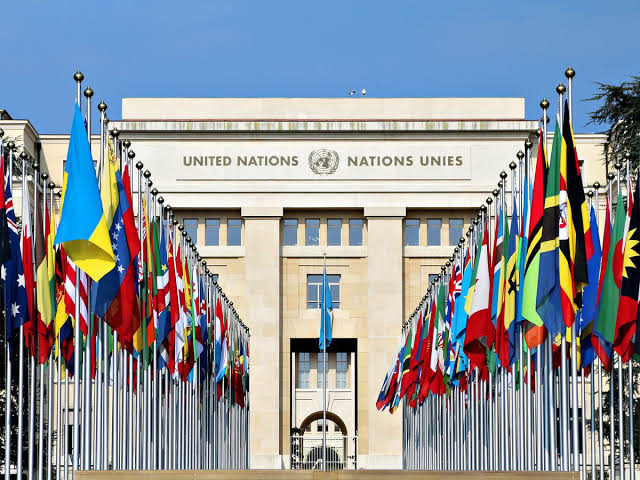
A United Nations fact-finding mission has raised serious concerns over two United States air strikes in Iran that killed at least 178 civilians, including women and children, saying there are reasonable grounds to believe the attacks may amount to war crimes.
The findings were contained in a report by the UN Independent International Fact-Finding Mission on Iran released on Thursday and submitted for consideration by the UN Human Rights Council in Geneva. The investigation focused on the conduct of the United States during the Iran war, while also examining the Iranian government’s response to nationwide protests that began in late December and continued into early 2026.
The mission also accused Iranian authorities of serious human rights violations and crimes against humanity during the crackdown on the protests, including allegations involving unlawful killings, torture and arbitrary detention.
The US strikes examined by the investigators included an attack on a primary school in Minab and another strike on a sports facility in Lamerd.
One of the most serious incidents examined by the mission was the strike on the Shajareh Tayyebeh Primary School in Minab, southern Iran, on February 28.
According to the findings, the attack was carried out using Tomahawk missiles and resulted in the deaths of more than 150 people, including 120 children, according to the UN report as reported by Reuters.
The investigators said the nature of the school as a civilian educational facility should have been readily apparent before the attack.
“The Mission concluded that when identifying and directing its attack against the primary school in Minab, whose civilian nature is apparent, the US failed in its obligation to do everything feasible to verify that it was a military objective,” the report stated.
The mission said photographs and videos taken before and after the strike showed “readily identifiable features” indicating that the location was a school serving young children.
“These included child-oriented murals painted on exterior walls, school signage, and playground areas
“According to public reporting, satellite imagery of the school before the strike also appears to show human figures, readily identifiable as children, gathered in its courtyard,” said the UN report.
The aftermath of the strike was described as devastating. State-affiliated Iranian media released images showing extensive destruction at the site, including damaged school facilities, bloodied schoolbooks and backpacks, as well as relatives carrying the remains of children.
“Several families lost more than one child, reflecting the devastating impact of the attack on families and the wider community,” the report said.
The UN mission’s findings place particular emphasis on the obligation of military forces to distinguish civilian objects from legitimate military targets and to take feasible steps to verify targets before launching attacks.
The findings also revive questions surrounding the US explanation of the Minab incident.
In June, US President Donald Trump said that “nobody” purposefully attacked a girls’ school in Iran in February, while referring to an investigation into the incident.
However, the Pentagon had not publicly released its own detailed findings on the incident at the time of the UN mission’s report.
The UN investigation therefore adds an international assessment to the continuing dispute over what happened at the school and whether sufficient precautions were taken to protect civilians.
The second attack investigated by the UN mission occurred in Lamerd, where investigators examined a strike that killed 22 civilian men and women.
According to the report, the weapon used in the attack dispersed tungsten pellets over a wide area, causing civilian casualties.
The mission found that the sports centre targeted in Lamerd was “visibly separate” from a neighbouring compound belonging to Iran’s Islamic Revolutionary Guard Corps, or IRGC.
The distinction was significant because the proximity of a military installation does not automatically turn a nearby civilian facility into a military target under international humanitarian law.
The US Central Command, however, disputed that the United States had carried out the attack in Lamerd. In a statement issued in March, the command said US forces did not launch any strikes into the city on the day in question.
While scrutinising US military actions, the UN mission also examined the Iranian government’s response to nationwide unrest.
The investigators said Iranian authorities committed serious human rights violations and crimes against humanity during their crackdown on protests that began in late December and extended into early 2026.
The report therefore presents a broader picture of civilian suffering during the conflict, documenting allegations against both the external military campaign and the Iranian government’s response to internal unrest.
The mission’s findings are expected to be presented to the UN Human Rights Council in Geneva, where they could contribute to further international scrutiny of alleged violations committed during the conflict.
The report does not itself constitute a criminal conviction. Rather, it records the mission’s assessment of available evidence and could become part of future efforts to establish responsibility and accountability for alleged violations of international law.