
NEWS
“I Never Replied Trump, Who Am I To Reply Him?” — Senate President Godswill Akpabio Denies Responding to President Trump’s Allegations on ‘Christian Genocide,’ Petitions Police and DSS to Track Fake News Originators

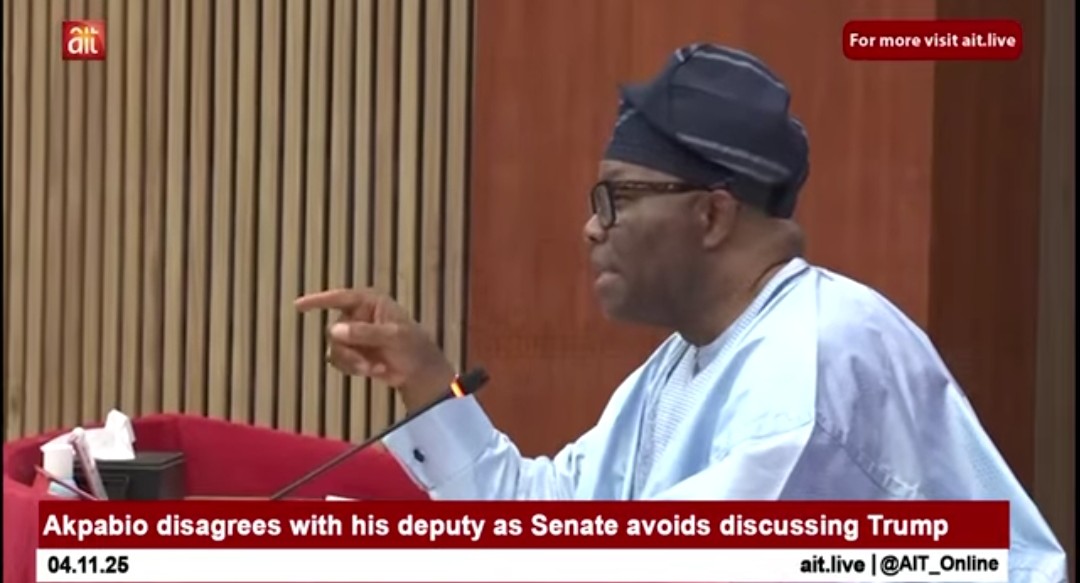
The President of the Nigerian Senate, Senator Godswill Akpabio, has firmly denied ever responding to former United States President Donald Trump regarding allegations of “Christian genocide” in Nigeria.
Speaking on the matter, the Senate President stated emphatically: “I never replied to President Trump over allegations of Christian genocide. I’ve petitioned the police and the DSS to find the character behind the news. It’s the presidency that’ll answer President Trump. Who am I to answer President Trump?”
According to Akpabio, the viral publication circulating across various social media platforms suggesting he had issued a response to Trump’s controversial comments is false, malicious, and aimed at misleading the public. He clarified that the alleged statement did not emanate from his office and described it as the handiwork of mischief-makers attempting to stir unnecessary controversy between Nigeria and the international community.
The Senate President disclosed that he has already lodged formal petitions with the Nigeria Police Force and the Department of State Services (DSS) to investigate and identify the individuals or groups responsible for fabricating and spreading the false statement. He emphasized the need to curb the rising menace of fake news, which he described as a threat to national stability and international relations.
Akpabio further reiterated that matters concerning diplomatic relations or international responses to foreign leaders’ statements fall strictly within the jurisdiction of the Nigerian Presidency, not the National Assembly. He maintained that he holds deep respect for both the office of the President of Nigeria and the former U.S. President, and therefore could not have issued such a statement attributed to him.
The Senate President’s reaction follows widespread online circulation of a report claiming that he had personally replied to President Trump’s alleged remarks on the persecution of Christians in Nigeria. His swift denial and formal complaint to the authorities underscore his commitment to transparency and the protection of his public image from political propaganda and misinformation.
The incident also brings renewed attention to the challenges of fake news in Nigeria’s digital space, especially involving high-profile political figures and sensitive international matters.