
NEWS
Abia State Govt Unveils Comprehensive Reform Blueprint for Hospitality and Tourism as Two-Day Strategic Stakeholders’ Engagement Kicks Off in Umuahia

…as Gov. Otti’s Administration Deepens Reform Agenda in Tourism Sector
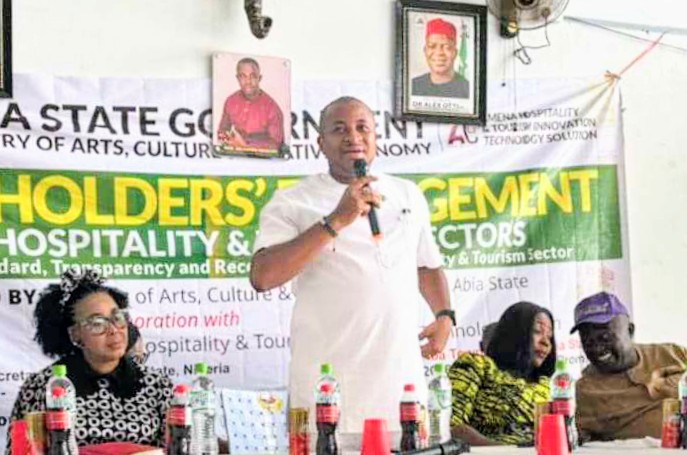
A bold new chapter in Abia State’s economic diversification drive has begun with the commencement of a two-day Stakeholders’ Engagement for the Hospitality and Tourism Sectors, designed to reposition the industry as a major engine of sustainable growth, job creation, and investment attraction.
The high-level forum, convened in Umuahia by the Abia State Ministry of Arts, Culture and Creative Economy in collaboration with Amena Hospitality and Tourism Innovation Technology Solution, brought together policymakers, industry leaders, hotel owners, tourism operators, and regulatory authorities to chart a unified roadmap for sector-wide transformation.
Declaring the engagement open, the Commissioner for Arts, Culture and Creative Economy, Chief Matthew Ekwuribe, outlined a clear reform-driven vision anchored on innovation, standardization, and strategic partnerships. He reaffirmed the unwavering commitment of Governor Alex Otti’s administration to building an enabling environment that attracts both local and international investment, stimulates employment, and positions Abia as a preferred tourism destination in Nigeria.
The Commissioner emphasized that the hospitality and tourism industries are not merely service sectors but strategic economic pillars capable of driving inclusive prosperity. He urged operators across the State to align with the government’s ongoing reform initiatives by embracing global best practices and leveraging technology to improve service delivery, operational efficiency, and competitiveness.
In a major policy announcement, Chief Ekwuribe disclosed that the State Government will embark on a comprehensive inspection, grading, and classification exercise covering hospitality and tourism facilities across Abia.
The initiative, he explained, is aimed at upgrading operational standards, addressing the persistent challenge of poor facility maintenance, and restoring confidence in the sector. Through proper grading and classification, hospitality establishments will be positioned to compete more effectively in both domestic and international markets.
He further highlighted the strategic integration of technology into the sector, noting that digital platforms will empower customers to share real-time experiences, reviews, and feedback. This transparency-driven approach, he said, would naturally encourage operators to maintain high service standards while strengthening consumer trust.
The reform framework is expected to enhance quality assurance, improve industry reputation, and elevate Abia’s profile as a competitive tourism hub.
The Managing Director of Amena Hospitality and Tourism Innovation Technology Solution, Edosa Eghobamien, underscored the urgency of digital transformation within the hospitality ecosystem. He noted that the engagement would equip participants with practical insights into emerging global trends, innovative management models, and digital tools capable of revolutionizing operations.
According to him, modern hospitality success is increasingly driven by technology from automated bookings and customer relationship management systems to data analytics and digital marketing strategies. In a rapidly evolving global tourism landscape, integration of technology has become indispensable for survival and growth.
Eghobamien expressed his organisation’s readiness to partner with the Abia State Government in building a competitive and sustainable tourism ecosystem. He stressed that sustained collaboration between government and private sector stakeholders would unlock significant growth opportunities, boost revenue generation, and elevate the sector’s visibility at both national and international levels.
Also addressing participants, the Permanent Secretary of the Ministry of Arts, Culture and Creative Economy, Chibuzo Ehiemere, described hospitality and tourism as critical pillars in Abia’s broader economic diversification strategy.
She noted that the Ministry’s mandate goes beyond regulation to include strategic development and repositioning of the industry in line with modern standards. Strengthening competitiveness, enhancing quality assurance, and ensuring that tourism contributes meaningfully to sustainable economic growth remain central objectives of the State’s policy direction.
In their separate interventions, leading industry voices including the Chairman of the Nigeria Hotels Association, Abia State chapter, Prince Charles Ezeala, and hotelier Prince Ikenna Oham, highlighted the importance of continuous dialogue and periodic policy reviews.
They noted that consistent engagement between government and operators is essential for sustaining growth, increasing patronage, and expanding economic opportunities for residents. While commending Governor Otti for significant strides in infrastructure and governance reforms that have positively impacted the hospitality industry, they called for a more considerate and business-friendly tax regime.
According to them, easing operational pressures on hotel owners through tax reforms would stimulate further investment, expand capacity, and strengthen the sector’s contribution to the State’s internally generated revenue.
The engagement was attended by the Director-General of the Abia State Tourism Board, Lady Kate Emezue, alongside key players across the tourism and hospitality value chain.
As deliberations continue, the two-day forum signals more than a routine industry meeting, it represents a coordinated move by the Abia State Government to institutionalize standards, harness innovation, and forge strategic partnerships capable of transforming hospitality and tourism into a robust driver of economic prosperity.
With structured reforms, technology integration, and collaborative governance at the forefront, Abia appears poised to reposition itself as a competitive, investment-friendly, and globally visible tourism destination.