
NEWS
BLOOD, NEGLECT, AND SILENCE: HOW A TIMBER MARKET SHOOTING, ALLEGED HOSPITAL NEGLIGENCE, AND MILITARY INACTION ENDED THE LIFE OF TRUCK DRIVER, MR. KELECHI EJIOFOR IN ABA

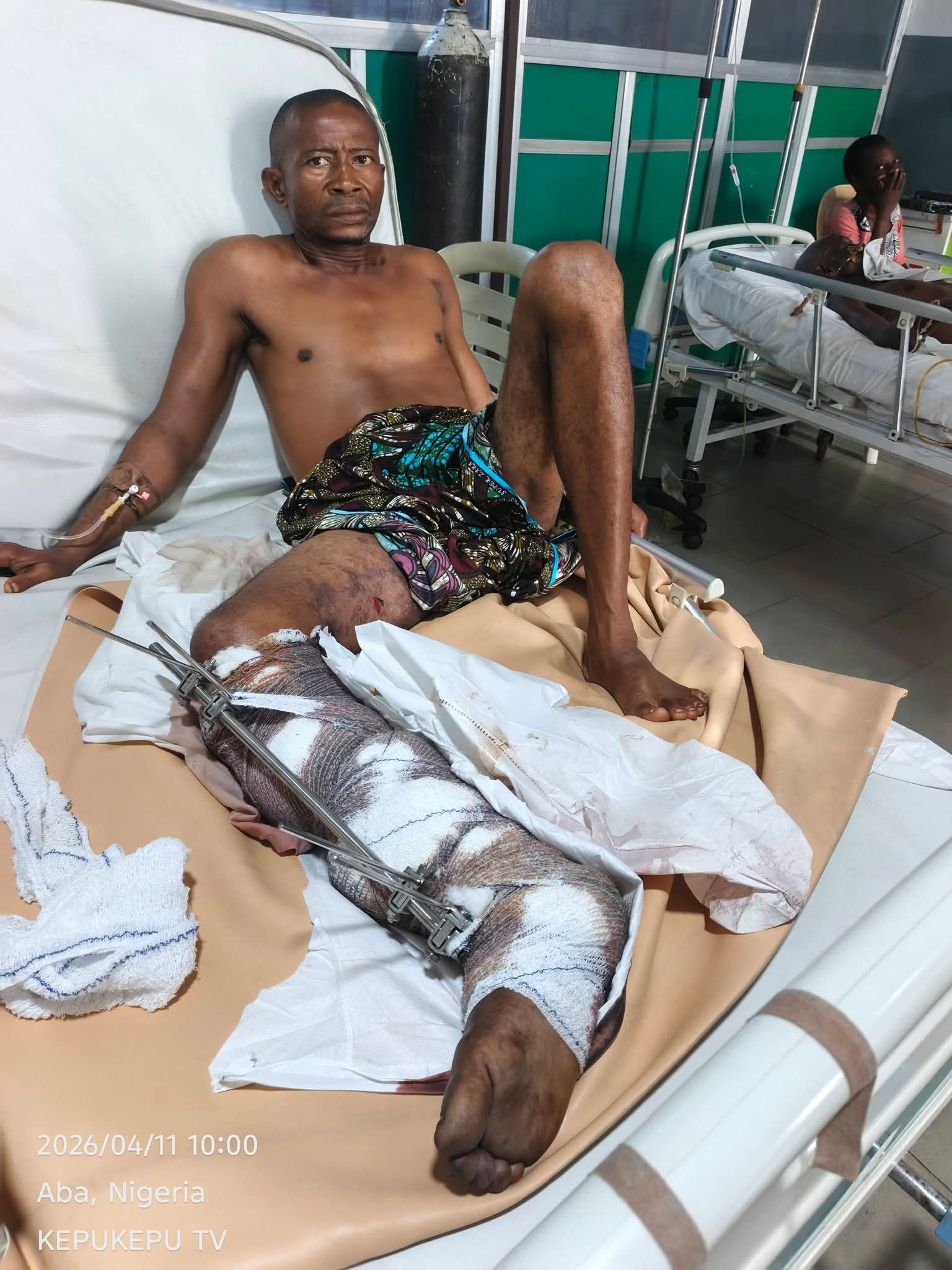
Aba woke up to grief, anger, and unanswered questions in the early hours of Monday, April 13, 2026, following the tragic death of Mr. Kelechi Ejiofor, a truck driver whose life spiraled from a gunshot incident at the bustling Uratta Timber Market into a painful and controversial end at the Abia State University Teaching Hospital, Aba.
According to verified reports, news of his death filtered in around 2:00 a.m., sending shockwaves through colleagues, family members, and residents who had followed his desperate fight for survival. What began as a shooting incident has now snowballed into a deeply emotional and explosive narrative involving alleged medical negligence, abandonment, and institutional silence.
Eyewitness accounts reveal that before Mr. Ejiofor was rushed to the hospital, an orthopaedic specialist had indicated that his injured leg could potentially be saved, provided urgent and proper medical intervention was administered. The critical question reportedly asked at the time, whether his toes were still moving, suggested that amputation might have been avoidable.
However, what followed paints a troubling picture.
Sources within the hospital allege a pattern of delay, indifference, and confusion in handling the emergency. Despite directives reportedly issued by the Chief Medical Director, Prof. Ijeoma Nduka, that the patient be treated immediately without financial demands, some medical personnel allegedly insisted on payment before continuing treatment. One account even claims that a personal bank account was provided for payment, a development that has further fueled outrage. As hours turned into days, hope reportedly faded.
Family members, especially his wife, were said to have been left in anguish, crying out over what they described as abandonment at a critical moment. What could have been a life-saving intervention gradually deteriorated into a grim outcome. The injured leg, initially believed salvageable, reportedly worsened to the point of decay, ultimately leading to amputation.
Yet, even that drastic measure could not save him. While the exact medical cause of death remains unconfirmed, hospital sources suggest complications arising after the amputation may have played a role. For many observers, however, the bigger issue lies not just in how he died, but how he was treated while still alive.
Equally disturbing is the silence from the military.
Mr. Ejiofor was reportedly shot by an officer of the Nigerian Army attached to the 144 Battalion Nigerian Army in Aba, yet days after the incident, no official statement or acknowledgment has been made. The absence of communication has only intensified public suspicion and frustration.
Within the Uratta Timber Market, tension is rising as associates and union members of the deceased are said to be mobilizing, demanding justice not only for the killing but also for what they describe as long-standing harassment and alleged extortion of truck drivers by some military personnel operating in the area. There are growing fears that if urgent steps are not taken, the situation could escalate into mass protests or civil unrest.
This is no longer just about one man. It is about a system many now believe failed at multiple levels, from the moment the trigger was pulled, to the hospital corridors where life hung in the balance, and to the silence that followed from those expected to speak.
As Aba mourns, one question lingers heavily in the air, could this death have been avoided?