
NEWS
BDC Operators on the Brink of Collapse as CBN’s Forex Suspension Cripples Operations

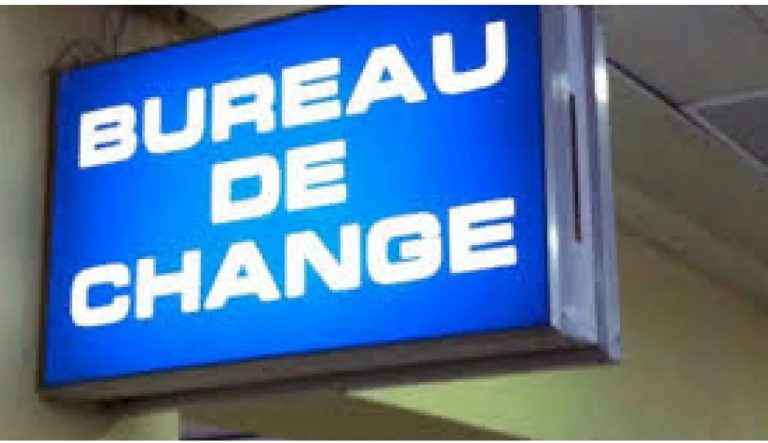
The Bureau De Change (BDC) operators across Nigeria have raised serious concerns over the state of their businesses, lamenting that they are close to going out of operation as most members struggle to stay afloat and meet up with overhead expenses.
These licensed currency traders attribute their financial distress mainly to the suspension of dollar allocation by the Central Bank of Nigeria (CBN), which has deprived them of access to foreign exchange from the official window, a move that has left the once-vibrant retail forex sub-sector gasping for survival.
According to several operators, the sharp decline in income has made it increasingly difficult to pay staff salaries, office rent, license renewal fees, and other compliance-related costs. This has been further compounded by growing uncertainty in the retail forex market, with many BDCs still struggling to meet recapitalization and licensing requirements.
The CBN had, in its monetary reforms, stopped the sale of forex to BDC operators, citing the need to sanitize and stabilize the foreign exchange market. However, the operators say that the apex bank has since made little or no intervention to revive their participation in the retail end of the forex market.
Despite this, the operators claim they are “engaged in positive discussions with the apex bank for the return of their active participation in the BDCs in the retail end of the forex market.”
In an exclusive chat with Nairametrics, a BDC operator, Abubakar Ardo, explained that most operators are barely managing to stay in business, as the non-sale of forex directly to them has crippled their operations.
He said that the demand for physical forex has dropped drastically, as most customers now prefer to make transfers or use online platforms and International Money Transfer Operators (IMTOs) instead of physical cash exchanges.
“Honestly, things have been extremely tough for us lately. Most operators are just managing to stay afloat. Since the CBN stopped selling forex directly to us, our operations have been badly affected. We used to depend largely on the official window to get foreign exchange at regulated rates, but that avenue has been shut for a long time,” Ardo said.
He continued:
“Right now, survival depends mostly on what we can get from walk-in customers, people coming in to sell small amounts of dollars, pounds, or euros. But that’s not structured or steady. Sometimes, you can go days without a single serious transaction. The market is very dislocated, and demand has dropped sharply because most people now prefer to do transfers or use online platforms or IMTOs instead of physical cash exchanges.
“This may be good for the Naira, but sincerely, many of us are suffering. That’s why we’re proposing we get fully integrated.
“Meeting up with overhead costs has become a major challenge. Office rent, staff salaries, licenses, and other compliance expenses are still there, but the income isn’t coming in as before. As I talk with you, many operators have either closed shop temporarily or reduced their workforce just to cut costs.”
Ardo emphasized that most BDCs are now operating in “survival mode,” keeping their licenses active while hoping for the CBN’s eventual reintegration of the BDCs into the official forex market.
Echoing similar concerns, the President of the Association of Bureau De Change Operators of Nigeria (ABCON), Aminu Gwadebe, confirmed that the majority of members are struggling to sustain their operations, describing the current situation as “near extinction.”
“The market is stable. As patriotic citizens, we align with policies that strengthen our sovereignty, which is the naira, and commend both the regulatory and fiscal authorities on the naira stability and elimination of exchange rate spikes.
“Our operations are currently near extinction, with the majority of our members struggling to meet up with overhead expenses. There is an ongoing positive collaboration between the CBN and the operators on the return of active participation of the BDCs in the retail end of the FX market,” Gwadebe said.
He further noted that the BDCs have historically served as one of the most potent tools in the CBN’s foreign exchange policy transmission mechanism, but the recent policy shift has rendered many operators “comatose.”
“The majority of us are comatose as survival is largely dependent on the official foreign exchange market, which is not accessible to the BDCs, with only very few grappling with dislocated and unstructured walk-in customers.”
Gwadebe reiterated that the CBN discontinued forex sales to the BDCs long ago, with “little or no intervention to date,” leaving operators uncertain about the future of the sector.
With thousands of operators struggling to survive, industry experts fear that the continued exclusion of BDCs from the official forex market could lead to the complete collapse of the sub-sector, one that once played a crucial role in stabilizing Nigeria’s retail forex system.
For now, the BDC community remains hopeful that its ongoing discussions with the CBN will yield positive results and bring back a structured and regulated market system that ensures the survival of their businesses while complementing the apex bank’s monetary policy goals.