
NEWS
Enugu Moves to Give Judiciary Financial Independence as Joint Committee Gets October Deadline

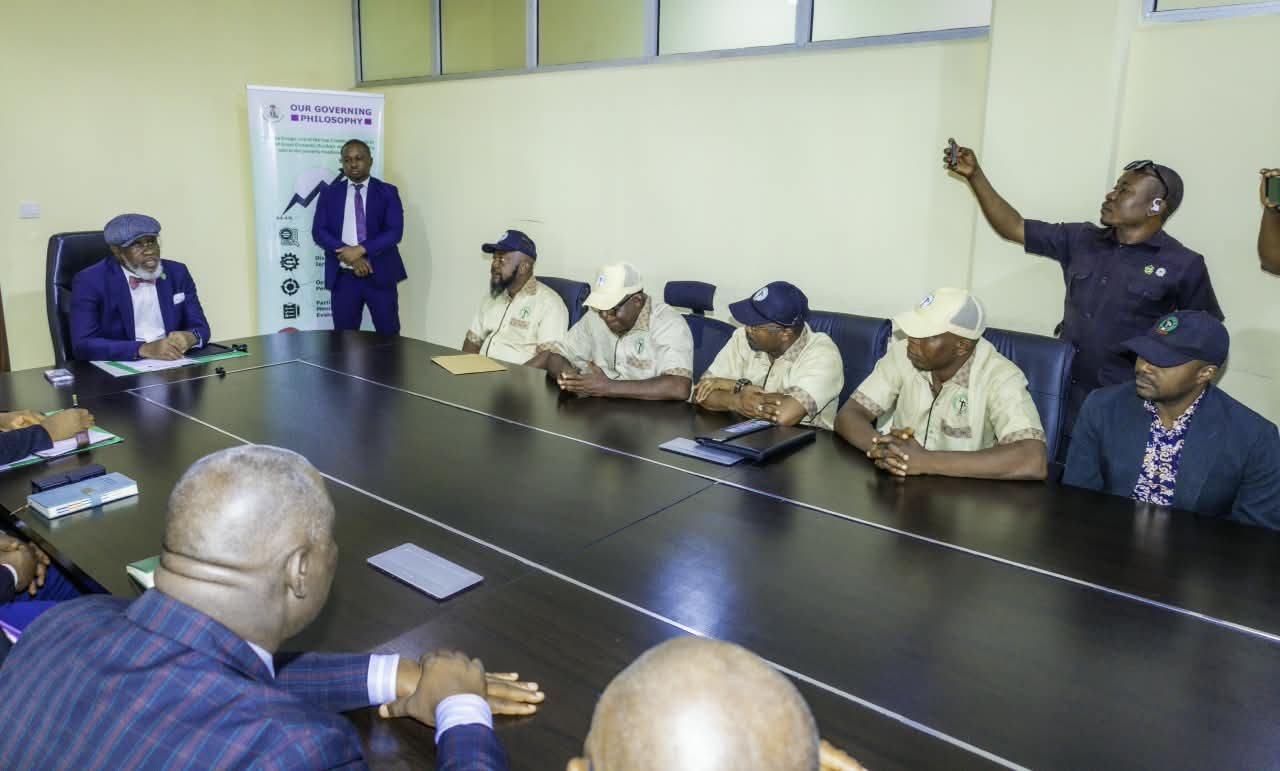
The Enugu State Government has taken a significant step towards strengthening the independence and institutional capacity of the state judiciary with the inauguration of a Joint Technical Committee to develop a comprehensive framework for implementing financial autonomy for the Judiciary.
The committee, inaugurated on Wednesday by the Secretary to the State Government, Prof. Chidiebere Onyia, on behalf of Governor Peter Mbah, has been given a firm deadline to submit its preliminary report to the Office of the Secretary to the State Government by 12 noon on October 19, 2026.
The initiative follows the agreement reached between the Enugu State Government and the Judiciary Staff Union of Nigeria (JUSUN) on September 17, 2025, and is aimed at translating the constitutional principle of judicial financial autonomy into a practical, transparent and sustainable arrangement for the state.
Speaking during the inauguration, Onyia explained that the committee had been constituted to address the administrative, financial, legal and operational requirements necessary for the effective implementation of financial autonomy for the Enugu State Judiciary.
“The primary purpose of the Committee is to develop and recommend a comprehensive, structured, transparent, and sustainable framework for the effective implementation of judicial financial autonomy for the Enugu State Judiciary,” he said.
The assignment goes beyond the preparation of a policy document, as the committee is expected to produce a comprehensive action plan capable of guiding the state through the various stages of implementing the new financial arrangement.
Among other responsibilities, the committee is expected to identify and resolve outstanding administrative, financial, accounting and operational issues affecting the Judiciary, while also facilitating the implementation of the Consolidated Judicial Salary Structure (CONJUS) for eligible judicial staff. It will equally develop an implementation roadmap clearly outlining the actions required, the institutions responsible for executing them and the expected outcomes at each stage.
A major component of the committee’s assignment is a comprehensive review of how judicial financial autonomy is currently being implemented across state judiciaries and the Federal Judiciary. The committee will examine existing institutional arrangements and relevant best practices, with a view to identifying models that could be adapted to suit the peculiar circumstances and requirements of Enugu State. It will also assess the state’s existing legal, institutional, administrative and financial framework governing the Judiciary, identify areas requiring adjustment and recommend appropriate measures, timelines and mechanisms for achieving a sustainable autonomous financial structure.
Another critical aspect of the assignment is the verification and reconciliation of the state’s financial obligations to the Judiciary and its workforce.
The committee will collate and verify outstanding salaries, allowances, arrears and other employment entitlements, while determining the legal basis for such payments. It will also establish an accurate database of eligible judicial staff through a review of staff establishment records, nominal rolls, payrolls and other personnel documentation. The financial implications of implementing CONJUS will equally come under scrutiny, including projected monthly and annual personnel costs as well as verified arrears. The outcome is expected to provide the government and Judiciary with a clear financial picture and an implementation roadmap for transitioning into the new arrangement.
The committee is chaired by the Attorney-General and Commissioner for Justice, Barr. Osinachi Nnajieze, and comprises representatives of the state government, Judiciary, labour and JUSUN.
Members include the Commissioner for Labour and Employment, Dr Felix Nnamani; Special Adviser on Labour Union Matters and Associations, Hon. Chukwudi Ezinwa; Special Adviser on Labour and Productivity, Robinson O. Odo; Mr Raymond Aneke of the Office of the Accountant-General; and Mr Ken Chukwuegbo, Principal Secretary to the Governor.
Other members are Chief Magistrate Kingsley Eze, Chief Registrar, Enugu State High Court; Chief Magistrate Sparkle Iheobuna, Chief Registrar, Customary Court of Appeal; Comrade Chinedu Eze, National Organizing Secretary, JUSUN; Comrade Sampson Ifedimma, Chairman, Enugu State JUSUN; Magistrate C.K.C. Idu, State Chairman, Magistrate Association of Enugu State; Dr Comrade Chinedu Mbah, National Vice-President, JUSUN South East; Comrade Jonas Onyia, State Secretary, JUSUN; and Comrade Ani Emeka Samuel, Assistant Secretary, Enugu State JUSUN.
Responding after the inauguration, the Chairman of the committee, Barr. Osinachi Nnajieze, said the committee had already addressed the outstanding issues surrounding the proposed financial autonomy arrangement and considered the financial implications for the state.
“We have sorted out all issues regarding that and had also considered and made recommendations on the financial implications for the state and a clear design on how it can be achieved,” Nnajieze said.
According to him, the proposed arrangement is designed to give the Judiciary greater control over its funding priorities and enable it to execute projects without undue interference from the Executive.
He, however, acknowledged that the Executive would remain central to providing the resources necessary to make the financial autonomy arrangement effective.
Nnajieze also highlighted Governor Peter Mbah’s commitment to advancing judicial independence, recalling that the governor had publicly expressed his willingness to support the initiative during the Nigerian Bar Association conference in Enugu.
He explained that the administration subsequently commenced the necessary steps towards giving practical effect to the commitment.
The Attorney-General further disclosed that Governor Mbah had sought to inaugurate the State Account and Allocation Committee (SAC), a constitutional body, describing the Joint Technical Committee as another step towards establishing the structures required for the effective operation of the SAC.
“This has nothing to do with the election but the governor’s commitment to make the Judiciary more effective and give greater independence to the Judiciary,” he said.
Also speaking with journalists after the inauguration, the National Vice President of the Judiciary Staff Union of Nigeria (South East Zone), Mr Chinedu Eze, said the union would provide the committee with relevant information and documentation required to complete its assignment.
Eze emphasised that financial autonomy for the Judiciary should be understood as a constitutional provision rather than a discretionary favour.
He said the implementation of the arrangement would strengthen the Judiciary’s capacity to discharge its constitutional and statutory responsibilities while enhancing its institutional independence.
The JUSUN leader expressed satisfaction with the decision by the Enugu State Government to advance the process, noting that a properly structured financial autonomy system would contribute to a more effective judicial system and improve the delivery of justice.
“An independent Judiciary will provide justice for all and not justice for the mighty or the connected. It will create a saner society and you know where there is justice there is peace,” he said.
With the committee now formally constituted and a 12 noon, October 19, 2026 reporting deadline in place, attention will turn to the technical work of reconciling financial obligations, determining the cost implications of CONJUS, resolving outstanding institutional issues and producing a workable framework f or judicial financial autonomy in Enugu State.