
NEWS
FG Approves Major Upgrade of Onne, Rivers, Delta, Calabar Ports, Oyetola Announces

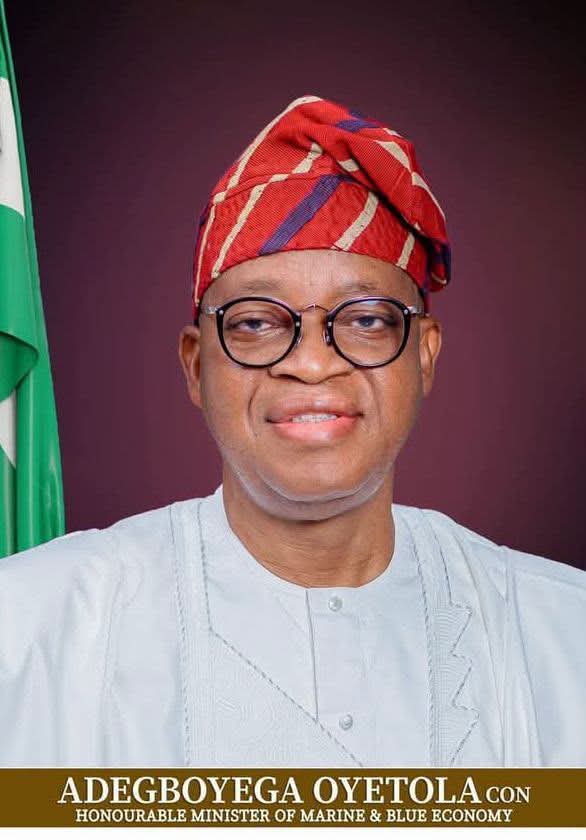
The Federal Government has approved the comprehensive modernisation and upgrade of four strategic ports across southern Nigeria as part of efforts to expand the country’s maritime capacity and strengthen its position as a major trade and logistics hub in Africa.
The Minister of Marine and Blue Economy, Dr. Adegboyega Oyetola, announced the approval on Sunday, September 27, 2026, naming the Onne, Rivers, Delta and Calabar ports among the facilities to benefit from the latest phase of the Federal Government’s port modernisation programme.
The development comes on the heels of earlier approvals for the modernisation and upgrade of Apapa and Tin Can Island ports in Lagos, signalling a broader effort to create a more balanced and competitive national port network rather than concentrating cargo activities around Lagos.
Oyetola said the latest approval formed part of the Federal Government’s strategy to reposition Nigeria’s maritime sector as a major contributor to economic growth, trade, investment and employment under President Bola Ahmed Tinubu’s Renewed Hope Agenda.
The Minister said the modernisation programme would transform Nigeria’s maritime infrastructure while unlocking the economic potential of ports across different regions of the country.
He explained that extending the upgrade programme beyond Lagos would create additional efficient gateways for international trade and help reduce the pressure and concentration of cargo traffic around the Lagos ports.
According to him, improved infrastructure and operational efficiency at Onne, Rivers, Delta and Calabar ports are expected to strengthen cargo handling, reduce vessel turnaround times, improve regional connectivity and make the movement of goods more predictable and cost-effective.
The four ports occupy strategic positions in Nigeria’s trade and regional economic activities, with their upgrade expected to support industrial development and expand opportunities within the wider maritime economy.
Oyetola further disclosed that the port modernisation programme is part of a much wider expansion of Nigeria’s maritime infrastructure, which also includes Federal Government approvals for the development of several new deep seaports.
Among the proposed deep seaport projects are the Ibom Deep Seaport in Akwa Ibom State, Bakassi Deep Seaport in Cross River State, Agge Deep Seaport in Bayelsa State, Gateway Deep Seaport in Ogun State, Ondo Deep Seaport in Ondo State and Bonny Deep Seaport in Rivers State.
The Minister said the simultaneous modernisation of existing ports and development of new deep seaports would significantly expand Nigeria’s capacity to handle growing trade volumes while creating stronger economic corridors across the country.
He stressed that the Federal Government’s approach was designed to build an integrated maritime and logistics system where ports are effectively connected with roads, railways, inland waterways and other transport infrastructure.
Such integration, he noted, would facilitate the seamless movement of cargo, reduce logistics costs and improve the overall efficiency of Nigeria’s trading environment.
Oyetola also reaffirmed the Ministry’s commitment to working with state governments, terminal operators, investors, shipping companies and other stakeholders to ensure that the approved projects translate into tangible improvements across Nigeria’s marine and blue economy.
With the latest approvals, the Federal Government is positioning port infrastructure development as a key component of its broader economic diversification strategy, with the ultimate objective of strengthening Nigeria’s maritime competitiveness, attracting investment and creating more employment opportunities.
The Minister maintained that Nigeria possesses the geography, market and maritime resources required to emerge as a leading maritime hub, adding that the responsibility of government is to provide the infrastructure, policies and enabling environment needed to convert those advantages into sustainable economic value.