
NEWS
Iran Could Have “Nothing Left to Trade” Within Two Weeks as Final Oil Shipments to China Near End, According to U.S Treasury Secretary, Scott Bessent

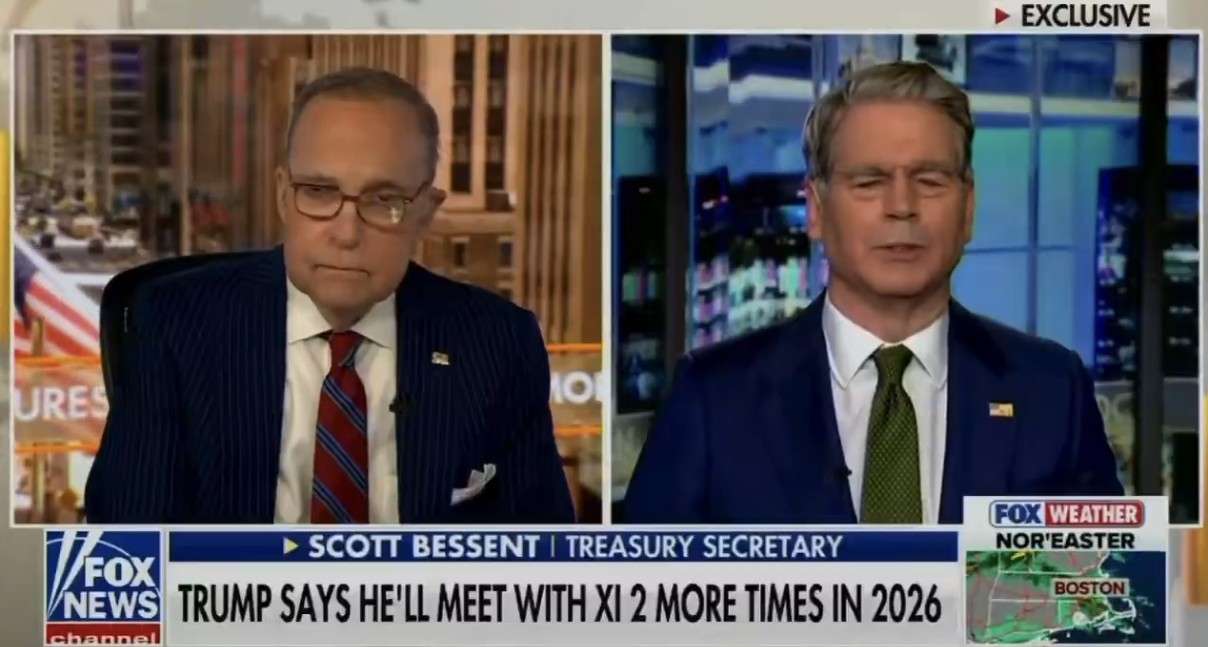
United States Treasury Secretary, Scott Bessent has warned that Iran could be left with “nothing left to trade for anything” within roughly two weeks, as Washington intensifies economic pressure on Tehran and the country’s remaining oil shipments to China approach their final deliveries.
Bessent made the assessment during an appearance on Fox News’ Sunday Morning Futures, arguing that Iran’s shrinking oil-export lifeline is placing increasing pressure on its economy and could push Tehran toward accepting a new agreement with the United States.
According to Bessent, only about 15 million barrels of Iranian crude remain on the water awaiting delivery. He said the remaining shipments are expected to reach China within the next two weeks, after which, in his assessment, Tehran would have far fewer resources available to use in international trade.
“I am confident, given that there’s only 15 million more barrels of Iranian oil on the water, that Iran will have nothing left to trade for anything,” Bessent told Fox News’ Sunday Morning Futures
“Probably within the next two weeks, they are going to make their final deliveries of oil to China, and then they will have nothing. It is an empty set. And I believe that they are feeling the pressure here, and that’s why they want a deal,“ Bessent added
The comments come as the Trump administration continues what it has described as a broad campaign to cut off Iran’s remaining economic lifelines.
Bessent has called the campaign Operation Economic Outcast, which Washington says is designed to pressure Iran and foreign entities that continue conducting business with Tehran.
The economic pressure has unfolded alongside the continuing conflict and disruptions around the Strait of Hormuz, one of the world’s most important energy corridors. The waterway has been a major flashpoint, with Washington maintaining that commercial oil shipments are still moving through the route despite attacks and security concerns.
Bessent maintained that the strait is already functioning and disputed the need for Iran to offer its reopening as part of a ceasefire arrangement.
“The straits are open. We’re averaging now 15 to 22 million barrels a day… It was at about 20 [million] pre-conflict,” Bessent insisted.
His figures, however, are part of a broader dispute over the actual volume of oil moving through the waterway. Commercial shipping data and US government figures have differed substantially at various points during the conflict, with independent tracking indicating that flows have fluctuated considerably.
The latest confrontation has also become intertwined with diplomatic efforts.
Iranian officials recently promoted a seven-day ceasefire proposal that included reopening the Strait of Hormuz in exchange for the United States unfreezing approximately $12 billion in Iranian assets, lifting the blockade and easing sanctions.
President Donald Trump rejected the proposal, saying it did not meet his conditions for an agreement.
Trump has nevertheless indicated that further discussions with Tehran could take place, while maintaining that any eventual agreement must be substantially different from what Washington previously accepted.
For the Trump administration, the pressure campaign is not limited to Iranian oil exports. Washington has also targeted foreign companies, financial institutions and other entities accused of maintaining commercial relationships with Tehran.
Bessent has repeatedly argued that the objective is to ensure that any future agreement is enforceable and that Iran complies with its commitments.
“They are isolated from the world. They are a pariah state. And my job is to make sure that, when they come with a deal, that they want to stick to it. They did not stick to the MOU.
“Next time, if there is a deal, and that’s at President Trump’s discretion, they will stick to it, because they are on their knees,” Bessent said.
The Treasury secretary’s remarks effectively place a two-week window on what he described as the exhaustion of Iran’s remaining oil shipments already at sea. Whether that translates into the broader economic outcome he predicted remains dependent on Iran’s ability to secure alternative sources of revenue, maintain other trade channels and navigate the continuing confrontation with Washington.
The warning comes as oil markets remain highly sensitive to developments surrounding the Iran conflict and the Strait of Hormuz. Recent market reporting has highlighted continued uncertainty over supply flows, with geopolitical developments capable of rapidly affecting crude prices and global energy security.