
NEWS
Vucic Resigns as Serbia’s President as Youth-Backed Opposition Gains Ground Ahead of Snap Election

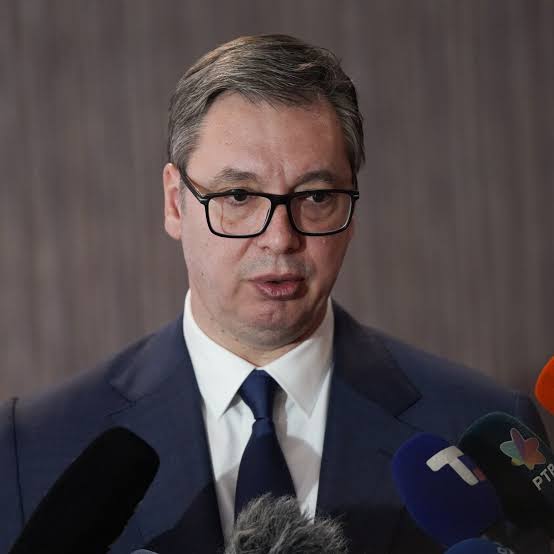
Serbia’s President, Aleksandar Vucic, has announced his resignation from office, bringing his second and final five-year term to an unexpected end and setting the country on course for an early presidential election.
Vucic, 56, announced his decision on Sunday, September 27, 2026, roughly seven months before his tenure was originally expected to expire. His resignation comes at a politically significant moment, with Serbia preparing for a snap parliamentary election on October 25, when voters will elect 250 members of the National Assembly.
The development has added a new dimension to Serbia’s already intense political contest, particularly as the ruling Serbian Progressive Party (SNS) faces a growing youth-backed opposition movement that emerged from months of anti-corruption protests.
Addressing supporters at the Presidency building in Belgrade, Vucic defended his record in office and reflected on his years at the helm of the country.
“I have faithfully served you and my fatherland, Serbia. I am proud of what we have done together,” he told supporters.
Vucic, a populist politician who previously served as Serbia’s Minister of Defence, is expected to remain a major figure in the country’s political landscape despite stepping down from the presidency.
His resignation clears the way for an early presidential election, with Vucic saying that the first round will take place by the end of December.
Under Serbia’s Constitution, a presidential election must be completed within 90 days of the vacancy occurring, while the official campaign period is required to last between 30 and 60 days.
Until a new president is elected, outgoing parliament Speaker Ana Brnabic will serve as acting President.
Brnabic previously served as Prime Minister from 2017 to 2024 and remains a prominent figure within the ruling political establishment.
The presidential transition is unfolding against the backdrop of the October 25 parliamentary election, which could determine the political environment in which the next presidential contest takes place.
Polling cited in the report indicates that Vucic’s political camp continues to command significant support, although a sizeable opposition movement has emerged among Serbia’s younger population.
Factor Plus polling puts public support for Vucic’s United Serbia, led by the Serbian Progressive Party, at 49 percent, while the youth-backed opposition grouping known as the Student List is reported to have approximately 37 percent support. The emergence of the Student List represents one of the most notable developments in Serbia’s current political landscape.
The movement grew out of the “Students in Blockade” group, which emerged following the collapse of the canopy at the Novi Sad railway station in November 2024. The tragedy triggered widespread anti-corruption demonstrations and intensified public scrutiny of government institutions, infrastructure projects and political accountability.
Over time, the student movement expanded beyond university campuses, attracting academics, public figures and professionals who became involved in calls for greater transparency and accountability.
The movement has now transformed its street-level mobilisation into an electoral challenge. Its organisers reportedly gathered nearly 70,000 signatures before the group was formally recognised for the parliamentary contest. The Electoral Commission subsequently placed the Student List at number 3 on the ballot.
Vucic’s resignation therefore comes at a pivotal point for Serbia, with the country facing both a parliamentary election and an impending presidential contest.
While the SNS remains the dominant force according to the cited polling, the emergence of a well-organised youth-backed opposition has introduced a new element into the political competition.
Vucic’s next political move could also prove significant. His departure from the presidency does not necessarily mean an exit from public office, as the political arrangement following the parliamentary election could potentially see him take on the role of Prime Minister if the Serbian Progressive Party retains majority control of government.
With the parliamentary vote approaching and presidential elections expected before the end of the year, Serbia is entering a period of significant political transition that could reshape the country’s leadership structure and determine the future direction of its ruling establishment and increasingly assertive opposition.