
NEWS
Pope Leo XIV Begins Walking, Resumes Normal Diet After Lung Cancer Surgery as Doctors Confirm Encouraging Recovery

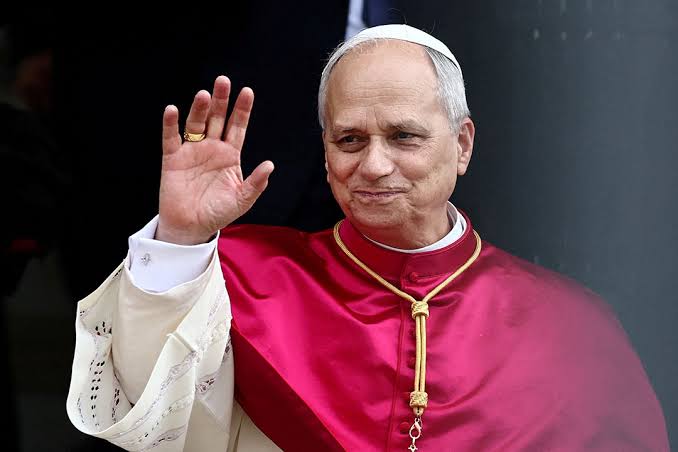
Pope Leo XIV has begun walking, resumed his regular diet and started respiratory exercises following surgery to remove a cancerous mass from his lung, with initial medical tests indicating a normal recovery, the Vatican has announced.
The update, released on Wednesday, October 14, 2026, by the pontiff’s medical team, offered encouraging news about the 71-year-old leader of the Catholic Church following an operation to remove an affected section of his lung.
However, doctors are still awaiting further test results to determine whether the cancer has spread and whether additional treatment will be necessary.
The Pope’s doctors, Dr. Luigi Carbone and thoracic surgeon Dr. Stefano Margaritora, said initial blood tests and a chest X-ray showed that his recovery was progressing as expected.
“The Holy Father underwent respiratory physiotherapy and has begun walking in his room. He resumed his regular diet and had breakfast and lunch. Recovery is proceeding as planned,“ they reported.
The development marks a significant step in the Pope’s postoperative recovery, although medical experts say the next phase will depend largely on the findings of additional examinations.
Medical examinations conducted during Tuesday’s surgery confirmed that Pope Leo XIV has lung adenocarcinoma, the most common type of lung cancer.
The diagnosis has raised questions about the extent of the disease, the possibility of its spread to other parts of the body and whether the pontiff will require further medical intervention.
According to the Vatican, the approximately 90-minute operation was successful and concluded without complications.
Doctors are now awaiting additional test results before determining the most appropriate course of treatment. The Vatican’s reference to the “radical” removal of the affected lung lobe suggests that surgeons removed the entire section containing the suspected cancerous tissue, with the aim of eliminating the tumour.
However, the final assessment of the disease will depend on further examinations, including tests to establish whether cancer cells have reached nearby lymph nodes.
The right lung has three lobes, while the left lung has two. Following the removal of one lobe, the remaining lung tissue can gradually compensate for the lost capacity, particularly in patients who are otherwise healthy and physically active.
Pope Leo is known to maintain an active lifestyle, including weekly tennis games and swimming, factors that could be beneficial during his recovery.
Medical experts have cautioned that although the initial recovery is encouraging, it is too early to determine whether surgery alone will be sufficient to treat the Pope’s cancer.
Dr. Stephen Liu, a lung cancer specialist at Georgetown’s Lombardi Comprehensive Cancer Center, said adenocarcinoma is the most common form of lung cancer and generally has a more favourable prognosis than some other types.
However, he stressed that establishing the stage of the disease remains essential to determining the next steps.
“While we know the diagnosis, we now need to know the stage.
“We now need to know how big it is, how many spots in the lung are involved. Is it just one nodule, or more than one, and the lymph nodes, are they cancerous?“ Liu said.
Liu, who is not involved in the Pope’s treatment, explained that if further examinations reveal that the cancer has spread, doctors may consider additional therapies depending on the findings.
Possible options include chemotherapy, a combination of chemotherapy and immunotherapy, or targeted therapy, which uses medication designed to act on specific characteristics of cancer cells.
The results of tests involving the Pope’s lymph nodes could prove particularly important in determining whether the disease remains confined to the removed lung tissue or has extended beyond it.
For now, the Vatican has not disclosed the results of those examinations.
Dr. PierCarlo Gentile, head of radiation oncology at San Pietro Fatebenefratelli Hospital in Rome, said the minimally invasive, video-assisted chest surgery performed on the Pope could allow him to regain mobility relatively quickly.
According to Gentile, patients who undergo this type of procedure can sometimes be back on their feet within 48 to 72 hours, while recovery from the operation itself typically takes between 15 and 20 days.
He also noted that postoperative complications, including infections, are uncommon.
Nevertheless, the Pope’s overall recovery timeline will depend on his individual progress, the results of follow-up examinations and whether further treatment is recommended.
Although his return to walking and normal eating represents a positive development, doctors will continue monitoring his condition as they determine the best way to protect his long-term health.
Beyond the medical developments, the Pope’s diagnosis has drawn attention to his unusually open approach to communicating about his health.
The American-born pontiff has provided an uncommon degree of transparency regarding the first publicly disclosed major health challenge of his 17-month papacy.
On Sunday, during his traditional noon prayer, Leo revealed that doctors had discovered a nodule, or growth, on his lung. He made the announcement during a live television broadcast, almost as an aside at the conclusion of his blessing.
The subsequent confirmation of cancer following surgery has reinforced the impression that the Pope intends to communicate more openly with the public about significant developments affecting his health.
Giovanni Maria Vian, a church historian and former editor-in-chief of the Vatican newspaper L’Osservatore Romano, described the announcement as a striking departure from established Vatican practice.
“That was truly a revolution. It was like he was reading a medical bulletin himself,“ Vian said.
For centuries, the Vatican has maintained a reputation for closely guarding information about the health of reigning pontiffs. The tradition is often captured in the popular Italian saying, “The pope is fine until he’s dead.“
The approach has historically reflected concerns about institutional stability, the possibility of political manoeuvring and the consequences of public uncertainty over the health of the leader of the Catholic Church.
St. John XXIII died in 1963, nearly a year after doctors diagnosed him with stomach cancer, a condition that was kept from public knowledge at the time.
Similarly, St. John Paul II died in 2005 after years of suffering from Parkinson’s disease, which the Vatican only confirmed after his death.
Pope Francis adopted a somewhat more open approach to discussing his health problems, including granting an Argentine doctor an extensive interview for a book examining his physical and mental well-being. Nevertheless, information about Francis’ condition remained tightly controlled during the final months of his life.
Vian, who served as part of the Vatican’s communications team from 2007 to 2018, said the institution’s longstanding preference for secrecy has both practical and cultural roots.
He explained that the Vatican’s history as a 2,000-year-old institution, combined with European cultural attitudes towards personal medical information, has contributed to the reluctance to disclose details about a pope’s health.
“In theory, the pope has an absolute power, so you can understand that there are many people who would aspire to that absolute power,“ he said.
Secrecy about a pope’s health, therefore, “is a legitimate defense of both the pope in question and the institution itself.“
Despite the greater openness surrounding Leo’s condition, the Vatican’s latest medical update also indicates that the full extent of the diagnosis was not publicly disclosed during the Pope’s Sunday announcement.
Doctors had already suspected cancer based on medical examinations, with the suspicion subsequently confirmed during Tuesday’s operation.
Vatican Cancels Papal Audiences as November South American Trip Remains Uncertain
The Pope’s health condition has also raised questions about his upcoming international engagements, particularly a planned visit to South America in November.
On Monday, the Vatican announced the cancellation of all Leo’s audiences through October 20 as he recuperates from surgery.
However, officials have not yet confirmed whether the pontiff will proceed with his planned November 6–17 journey to Uruguay, Argentina and Peru.
The proposed visit would represent the longest and most demanding international trip of his papacy so far. The itinerary is expected to involve more than 31,000 kilometres (approximately 19,000 miles) of travel, a dozen flights, two helicopter journeys and substantial changes in altitude during the Peru leg.
Such an intensive schedule could pose additional challenges for someone recovering from major chest surgery, particularly if further cancer treatment becomes necessary.
Oncology surgeons often advise patients to avoid flying for approximately three weeks after surgery, meaning the Pope could potentially have just enough time to recover before the scheduled departure.
Nevertheless, the feasibility of the trip will depend on his recovery, his respiratory function and the outcome of further medical examinations.
Liu said the decision would ultimately depend on the stage of the cancer and whether additional treatment is required.
“If it is stage 1, he can complete these trips. If more treatment is needed, I would likely advise against the trips,“ said Liu.
For now, the Vatican’s priority remains the Pope’s recovery and the completion of the necessary medical investigations before making decisions about his future schedule.
While his ability to walk, eat normally and participate in respiratory exercises has provided grounds for cautious optimism, the coming days are expected to be important in establishing the full extent of his illness.
The outcome of the additional tests will determine whether the successful removal of the affected lung tissue marks the end of his immediate cancer treatment or the beginning of a longer medical journey.