
NEWS
“Algorithms Will Not, and Must Never, Decide the 2027 Vote” — INEC Chairman, Prof. Joash Amupitan Declares, Vows to Protect Nigerians’ Electoral Choice

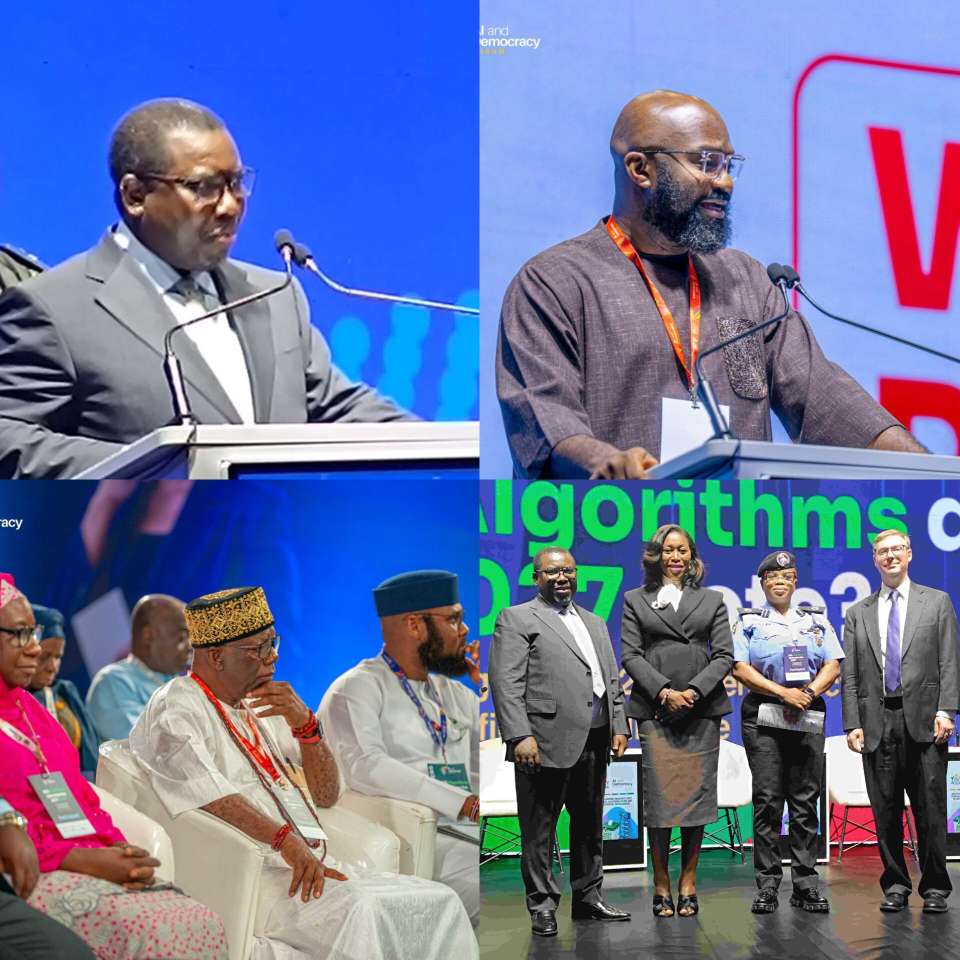
The Chairman of the Independent National Electoral Commission (INEC), Prof. Joash Amupitan, SAN, has declared that artificial intelligence and computer algorithms will not determine the outcome of Nigeria’s 2027 General Elections, insisting that the ultimate power to decide the country’s political leadership rests exclusively with the Nigerian electorate.
Amupitan made the declaration at the Artificial Intelligence and Democracy Forum 2026 in Abuja, held under the theme: “Safeguarding the 2027 General Elections in the Age of Artificial Intelligence.” He stressed that while technological innovation could significantly improve electoral administration, it must never be allowed to undermine citizens’ democratic rights, institutional accountability or the credibility of election results.
In a strong message underscoring the supremacy of the electorate in a democratic system, the INEC Chairman said technology must remain a tool for enhancing human decision-making, strengthening institutional efficiency and promoting transparency rather than replacing the will of the people.
“Algorithms will not, and must never, decide the 2027 vote. The choice of who leads Nigeria belongs exclusively to the Nigerian people. Algorithms may predict patterns; they may optimise routes, and they may even suggest preferences. But they do not have a conscience, they do not have a country, and they do not have a vote,” Prof. Amupitan said.
His declaration comes as Nigeria prepares for the 2027 General Elections amid growing concerns about the influence of artificial intelligence on political campaigns, digital communication, electoral logistics and the spread of misleading information capable of shaping public opinion. With exactly 92 days to the 2027 General Elections, Amupitan acknowledged that artificial intelligence would inevitably influence the information environment in which voters make decisions, while also affecting the speed, efficiency and security of election-related operations.
“While algorithms will not decide the vote, AI will undeniably shape the information environment in which citizens form their choices, influence the speed and security of electoral logistics, and alter the tactics of both democratic actors and anti-democratic disruptors,” he said.
The forum, jointly convened by INEC and Yiaga Africa, attracted an extensive gathering of electoral stakeholders and democracy advocates from Nigeria and across the African continent.
Participants included the Chairperson of the ECOWAS Network of Electoral Commissions and Chairman of Senegal’s Electoral Commission, Mr Abdoulaye Sylla; members of the diplomatic corps; INEC National Commissioners and Resident Electoral Commissioners; heads of electoral management bodies across Africa; international development partners; political party leaders; civil society organisations; media executives; security agencies; technology companies; and members of the academic community.
The gathering provided a platform for discussions on how electoral institutions, technology companies, political parties, the media and civil society organisations could collectively address emerging threats associated with artificial intelligence while taking advantage of its potential benefits.
Amupitan described the 2027 General Elections as the largest democratic exercise on the African continent and one of the most complex administrative undertakings in the world, considering the scale of Nigeria’s electorate, the geographical spread of polling locations and the number of elections to be conducted.
According to him, the exercise involves more than 103 million registered voters, 176,846 polling units spread across 774 Local Government Areas, and multiple levels of voting covering presidential, National Assembly, governorship and State House of Assembly elections.
The scale of the exercise, he explained, makes effective planning, accurate data management, secure technology and reliable operational coordination essential to ensuring that the electoral process meets the expectations of Nigerians.
He disclosed that INEC had already completed ten of the fourteen major operational milestones stipulated by the Electoral Act 2026, while continuing preparations for the elections. Among the measures highlighted were the procurement of additional Bimodal Voter Accreditation System (BVAS) units, the digitisation of candidate nominations through the INEC Candidates Nomination Portal (ICNP), and the introduction of online voter registration for the first time in Nigeria.
The Commission’s candidate nomination portal, he noted, was processing more than 15,000 nominations submitted by 22 political parties, reflecting the growing role of digital infrastructure in the management of electoral activities. Rather than viewing artificial intelligence solely as a threat, the INEC Chairman outlined several areas where responsible adoption of the technology could strengthen election administration and improve operational efficiency. These include predictive logistics and route optimisation to facilitate the timely distribution of election materials, automated assistance with result audits, improved biometric database management, multilingual voter engagement through Natural Language Processing, and AI-powered cybersecurity systems capable of identifying and responding to digital threats.
Such applications, he explained, could help electoral administrators identify operational challenges, improve planning, communicate more effectively with voters and strengthen the protection of sensitive electoral information.
However, Amupitan made it clear that technological efficiency must not come at the expense of human judgment and legal accountability.
He reaffirmed INEC’s commitment to the Human Oversight Principle, stressing that critical electoral decisions, result collation, voter accreditation and candidate qualification would not be left entirely to automated systems or autonomous artificial intelligence.
“Human accountability, statutory oversight, and judicial review will remain paramount at every stage of the electoral chain,” he said.
The INEC Chairman’s position reinforces the distinction between using technology to support election administration and allowing automated systems to exercise authority over decisions that must remain subject to electoral laws, institutional procedures and human accountability.
He also warned that the increasing sophistication of generative artificial intelligence had introduced new risks that could affect the integrity of the electoral process long before voters arrive at polling stations.
Among the threats he identified were deepfakes, synthetic media, targeted digital advertisements, algorithmic bias, micro-targeting and automated cyberattacks. These tools, he noted, could be exploited to circulate fabricated statements, manipulate political narratives, impersonate public figures and spread misleading content at a scale and speed that could be difficult to counter through conventional communication channels.
“The greatest threat we face is not the hacking of a ballot box, but the hacking of the voter’s mind.
“If a voter cannot distinguish between truth and a synthetic lie, the foundation of informed consent crumbles,“ he warned.
The warning highlights the growing importance of information integrity in modern elections, where the ability of citizens to access credible information and distinguish authentic content from fabricated material can influence the quality of democratic participation.
A fabricated video, manipulated audio recording or misleading digital publication circulated during a sensitive electoral period could generate confusion, inflame tensions or distort public understanding of candidates and political issues before the truth becomes widely known.
To strengthen its response to these emerging challenges, Amupitan announced that INEC had established a specialised Artificial Intelligence Unit within its Information and Communication Technology Directorate.
The unit, he said, was equipped with real-time digital monitoring tools, deepfake detection software and data analytics expertise to help identify technical threats and track attempts to manipulate information targeting the electoral process.
The initiative is intended to strengthen the Commission’s capacity to monitor evolving digital risks and improve its ability to respond to emerging forms of interference. Its effectiveness, however, will depend on the quality of its technical capabilities, the timeliness of its responses and its ability to operate transparently within the law.
Beyond the Commission’s internal measures, Amupitan called for a coordinated, multi-stakeholder approach involving political parties, civil society organisations, the media, security agencies, the judiciary and technology companies. He urged political parties to adopt and sign an Ethical AI Code of Conduct to promote responsible use of artificial intelligence during campaigns and discourage the deployment of deceptive technologies to mislead voters or discredit political opponents.
Civil society organisations, he said, should play a more active role in auditing algorithmic transparency, monitoring digital campaign spending and scrutinising the use of technology in political communication. He also called on security agencies and the judiciary to strengthen their expertise in cybercrime investigations and digital forensics to ensure that technology-related electoral offences could be properly investigated and addressed through established legal procedures.
For the media, the INEC Chairman stressed the importance of strengthening verification practices in an environment where digitally manipulated content can spread rapidly across social media platforms and messaging services. He urged media organisations to establish internal digital forensic desks capable of examining user-generated content before publication or broadcast, thereby reducing the risk of newsrooms inadvertently amplifying false information.
In a further proposal, Amupitan called for the establishment of an Electoral Information Integrity Coalition to serve as an early-warning network against viral AI-generated falsehoods and coordinated digital misinformation. The proposed coalition would bring together INEC, civil society organisations, the Nigerian Guild of Editors, the Nigeria Fact-Checking Coalition, media houses and telecommunications operators. By combining the monitoring capabilities and expertise of these institutions, the proposed network could help identify emerging disinformation campaigns, facilitate timely verification and improve the circulation of credible electoral information.
The proposal also reflects the need for collaboration across the digital information ecosystem, as misleading content can move rapidly between social media platforms, online publications, private messaging channels and conventional broadcast outlets. Returning to the central question of who would ultimately determine the outcome of the 2027 elections, Amupitan emphasised that the decision would belong to ordinary Nigerians across different occupations, regions and social backgrounds.
He pointed to “the young market woman in Aba, the farmer in Sokoto, the teacher in Ibadan, the tech innovator in Yaba, Lagos, the fisherman in Bayelsa, and the student in Maiduguri.”
The examples underscored his position that Nigeria’s electoral future must remain in the hands of its citizens, regardless of their geographical location, economic circumstances or level of technological exposure.
“On election day in 2027, it will be the thumbprint of the Nigerian citizen, guided by their own will and their own hopes, that decides our future.
“INEC’s job is to ensure that the voice of the people is heard clearly, above the noise of the machines,” he said.
He concluded by affirming that the future of democracy must not be determined by the limits or capabilities of technology, but by the choices that free citizens make through the laws, institutions and democratic processes established to govern them.
The opening session of the AI and Democracy Forum 2026 set the stage for two days of deliberations on artificial intelligence, electoral integrity and the future of democratic participation in Nigeria.
In his welcome remarks, Samson Itodo, Executive Director of Yiaga Africa, highlighted the importance of accurate data, transparent methodologies and auditable artificial intelligence systems in safeguarding electoral credibility.
His remarks reinforced the need for technology-assisted electoral processes to operate under clearly defined standards that allow relevant stakeholders to examine how systems function, identify potential errors and hold responsible institutions accountable.
Goodwill messages from representatives of Luminate, the European Union, the British High Commission and other development partners also emphasised responsible artificial intelligence adoption, stronger protections against misinformation and practical measures to safeguard democratic processes.
The discussions come at a critical moment for Nigeria’s electoral system, as technological innovation continues to transform political communication, information sharing and the administration of elections around the world.
While artificial intelligence offers opportunities to improve logistics, strengthen cybersecurity and expand voter engagement, its misuse could also create new avenues for deception, manipulation and interference. Addressing these risks will require more than technical solutions alone; it will also demand responsible political conduct, professional journalism, effective law enforcement, transparent institutions and an informed electorate.
As preparations for the 2027 General Elections continue, Amupitan’s message at the Abuja forum places the Nigerian voter at the centre of the democratic process: technology may assist the system, analyse information and improve efficiency, but it must not replace the judgment of citizens or override the legal safeguards governing elections.
Ultimately, the credibility of the 2027 elections will depend not only on the sophistication of the technology deployed but also on the transparency of electoral procedures, the integrity of the institutions involved, the quality of information availab








 le to voters and the protection of every citizen’s right to make an informed choice.