
NEWS
“They Have a Responsibility to Challenge INEC’s Results but They Often Wait for the Commission to Deliver Them” — Olisa Agbakoba Charges Political Parties To Hold INEC Accountable, Compile Independent Results

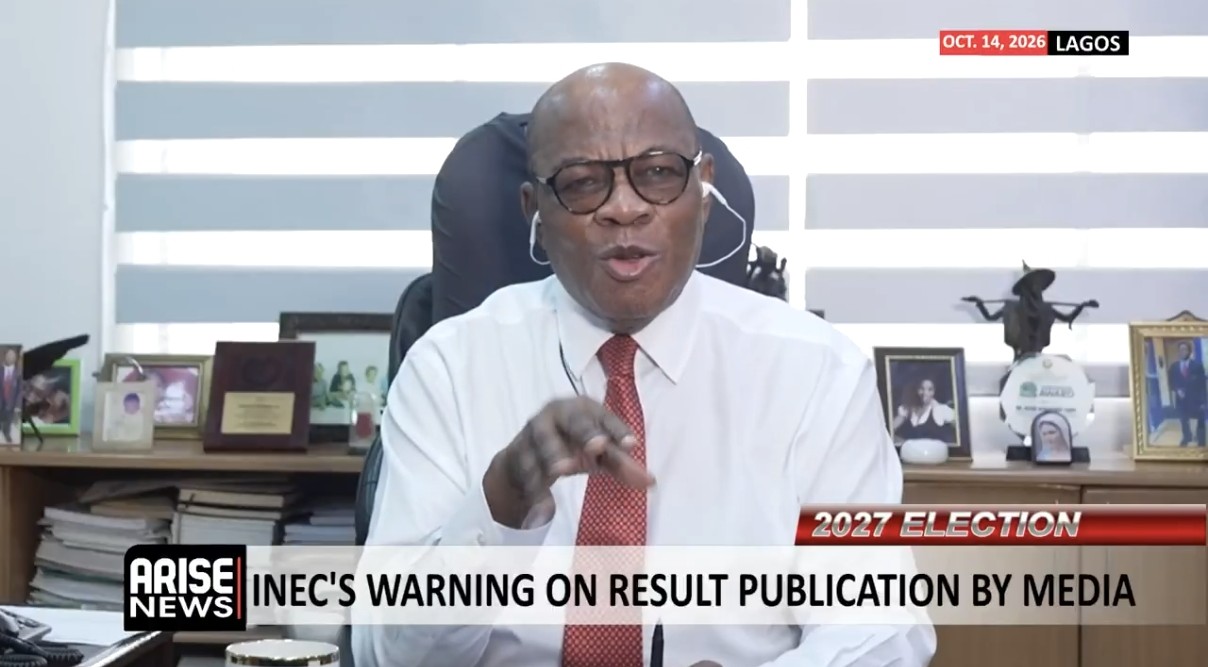
Senior Advocate of Nigeria (SAN), Olisa Agbakoba, has challenged political parties across Nigeria to take greater responsibility for safeguarding the integrity of elections by holding the Independent National Electoral Commission (INEC) accountable and independently compiling credible election results.
Agbakoba argued that political parties must move beyond depending solely on INEC for official election results and actively exercise their responsibility to monitor the electoral process, gather their own results and challenge outcomes they consider questionable through appropriate legal channels.
His position comes amid ongoing conversations about electoral transparency, the credibility of election results and the measures political parties can adopt to strengthen public confidence in Nigeria’s democratic process ahead of the 2027 general elections.
The Senior Advocate’s remarks were contained in a video published on the official X handle of Arise News on Wednesday, October 14, 2026, in which he expressed concern over what he described as the apparent failure of political parties to fully discharge their responsibilities under the electoral framework.
In the video, Agbakoba questioned why political parties appeared to rely heavily on INEC’s final declarations instead of proactively monitoring the collation process and preparing their own independently verified records of results from polling units.
He maintained that political parties have a responsibility to scrutinise the commission’s actions and challenge its declared results where necessary, rather than waiting passively for INEC to determine the outcome of elections without maintaining credible alternative records.
Expressing his displeasure with the approach adopted by some political parties, Agbakoba said, “I don’t know what is wrong with these political parties.
“I don’t know whether they even read the Electoral Act. They have a responsibility to challenge INEC’s results but they often wait for the commission to deliver them“
Agbakoba’s comments underscore the importance of proactive election monitoring, particularly the deployment of trained party agents to polling units, the proper documentation of results and the systematic collation of figures from the grassroots to the final stages of the electoral process.
According to the position he advanced, political parties should not wait until INEC announces the final results before beginning to question discrepancies. Instead, they should establish effective monitoring structures capable of independently documenting results as they emerge from polling units and comparing them with figures subsequently announced by electoral officials.
He further argued that the knowledge that political parties are closely monitoring the process and compiling alternative records of results could encourage greater diligence in the handling and announcement of election figures.
The underlying argument is that electoral accountability should not rest exclusively on the electoral commission. Political parties, as major participants in the democratic process, also have a role to play in ensuring that the votes cast by Nigerians are accurately recorded, collated and reflected in the final outcome.
For the 2027 general elections, this responsibility could place greater emphasis on adequate preparation by political parties, including the recruitment and training of polling agents, the use of legally permissible technology to document results, the secure transmission of polling-unit figures and the preservation of evidence for any electoral dispute that may arise.
However, independently compiling results does not, by itself, make a party’s figures official or conclusively establish that INEC’s declaration is incorrect. Any disagreement over results must be assessed against the applicable electoral laws, verified evidence and the procedures established for resolving electoral disputes.
Agbakoba’s intervention therefore raises a critical question for Nigeria’s political parties as preparations for the next general elections gather momentum: are they adequately equipped to monitor every stage of the electoral process and hold the electoral commission accountable when discrepancies arise?
His message is that political parties must recognise that protecting the integrity of an election requires more than campaigning for votes and waiting for official declarations. It also demands effective organisation, independent verification, vigilance and a willingness to challenge disputed outcomes through lawful means.
Ultimately, the credibility of Nigeria’s elections depends on a combination of transparent electoral administration, responsible political participation, effective monitoring and credible mechanisms for resolving disputes.
Agbakoba’s remarks place the spotlight on the role political parties themselves must play in ensuring that the electoral process commands public confidence ahead of the 2027 polls.