
NEWS
China Sentences Former City Official, Yang Youlin, to Death Over $325 Million Bribery Scandal

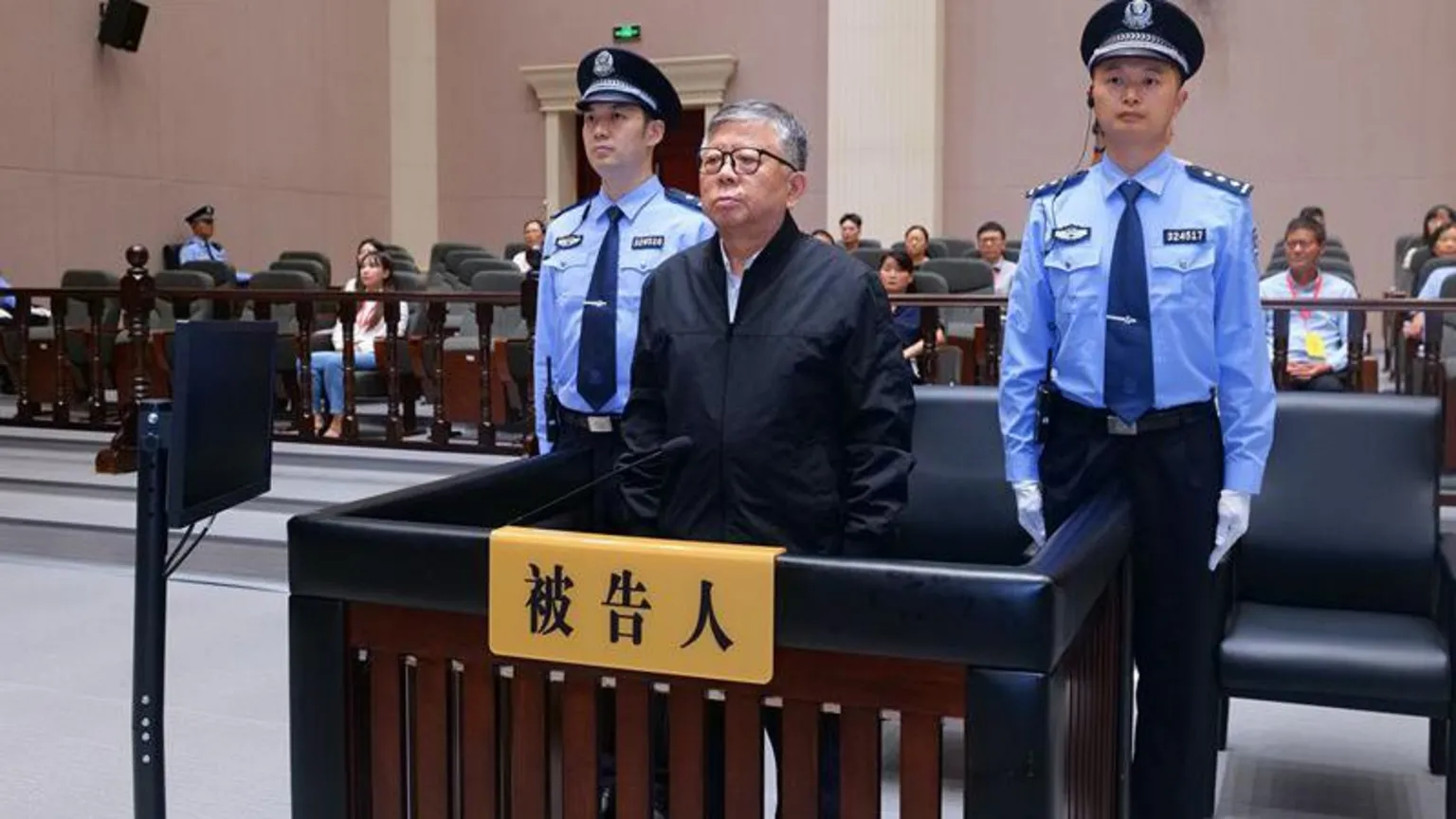
A Chinese court has sentenced a former senior city official to death after finding him guilty of accepting more than 2.2 billion yuan (about $325 million) in bribes over a period spanning three decades, in one of the country’s biggest corruption cases in recent years.
The former official, Yang Youlin, was convicted by a court in Changzhou, eastern China, on charges of bribery, embezzlement, abuse of power and money laundering following an extensive investigation into his activities while serving in various leadership positions in Nanjing between 1993 and 2023.
According to Chinese state media, Yang abused his offices to help individuals and companies obtain engineering contracts, facilitate land transfers and secure financing approvals in exchange for huge sums of money and valuable gifts.
The court ruled that his crimes were exceptionally serious, stating that his actions inflicted enormous losses on the interests of the Chinese state and its people. Investigators also described his illicit wealth as one of the largest uncovered in recent years.
Yang’s conviction comes amid President Xi Jinping’s sweeping anti-corruption campaign, which has targeted thousands of officials across different sectors, including the military, financial institutions and regional governments. Since assuming office, Xi has intensified efforts to root out corruption, although critics have argued that the campaign has also served to sideline political opponents.
Capital punishment for economic crimes remains uncommon in China but is still imposed in exceptionally severe corruption cases, particularly when the amounts involved exceed one billion yuan.
The latest judgment follows several high-profile convictions in recent years. Former finance executive Lai Xiaomin was executed in 2021 after being found guilty of accepting 1.8 billion yuan in bribes over a decade, while former Inner Mongolia official Li Jianping was executed in 2024 for embezzlement and bribery involving more than three billion yuan.
In many other corruption cases, Chinese courts have opted for lengthy prison terms or suspended death sentences, which are often commuted to life imprisonment after a specified period. Authorities have also reduced punishments for some convicted officials who cooperated with investigators by exposing other offenders.
Although Yang reportedly assisted investigators, pleaded guilty and expressed remorse during his final statement, the Changzhou court ruled that the gravity of his crimes outweighed his cooperation, making him ineligible for a reduced sentence.
The ruling underscores China’s continued hardline stance against large-scale corruption as authorities intensify efforts to crack down on public officials accused of abusing their positions for personal gain.