
NEWS
“What Are We Buying?” — Defence Minister, Christopher Musa Explains What ₦5.41tn Defence Budget Can Buy

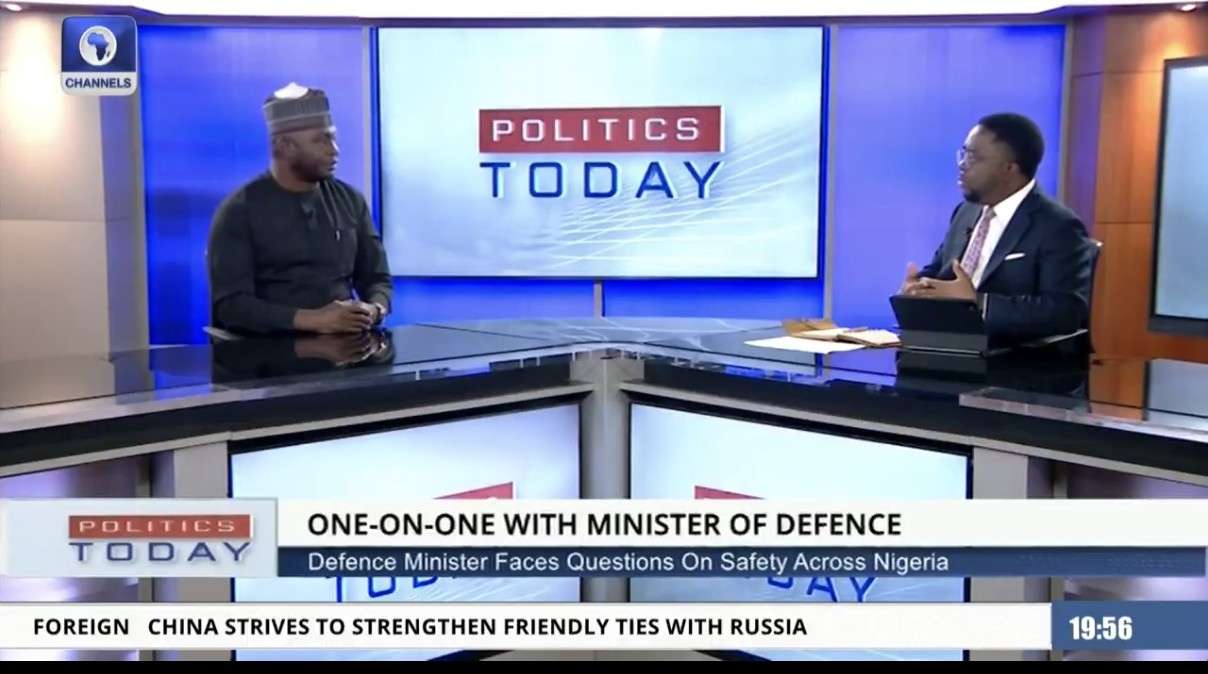
Nigeria’s Defence Minister, Christopher Musa, has offered a striking explanation of the country’s proposed ₦5.41 trillion defence allocation in the 2026 budget, highlighting the enormous cost of modern military equipment and precision weapons.
Musa made the clarification while responding to a question from Channels Television journalist Seun, who sought to understand how the huge defence allocation would be spent amid Nigeria’s persistent security challenges.
The journalist questioned the scale of the allocation, asking what the country was purchasing with the massive sum earmarked for defence.
Seun of Channels TV asked:
“₦5.41 trillion, that’s how much the President [Tinubu] said will go to defence in the 2026 budget. What are we buying?“
In his response, Musa explained that when the defence budget is converted into United States dollars and compared with the cost of modern military hardware, the amount becomes significantly less impressive in terms of what it can procure.
He pointed to the cost of missiles and precision-guided weapons as examples, stressing that sophisticated military operations can consume huge sums of money within a very short period.
Musa said:
“Divide it into dollars. What can you buy? Maybe you can buy a few things. One Tomahawk missile that was fired is $3.2 million. One drone precision bomb, the least, is $100,000, that’s ₦140 million. Imagine when you fire it: if it hits somebody or doesn’t hit something, ₦140 million is gone.“
The minister’s comments underscore the financial demands associated with modern warfare, where advanced aircraft, drones, missiles, surveillance systems, ammunition, training, logistics and maintenance can require substantial investments.
His reference to the cost of precision weapons also illustrates how quickly military expenditure can accumulate during sustained security operations. A single strike involving an expensive weapon can run into hundreds of millions of naira, regardless of whether the intended target is successfully hit.
The discussion comes as Nigeria continues to grapple with various security threats, including terrorism, banditry, kidnapping and other forms of violent crime across different parts of the country.
The ₦5.41 trillion defence allocation therefore represents not only expenditure on weapons but also the broader cost of maintaining the country’s armed forces, acquiring military platforms and equipment, paying personnel-related expenses, conducting operations and strengthening Nigeria’s overall defence capabilities.
Musa’s explanation effectively shifted the focus from the headline figure to the purchasing power of the defence budget, arguing that the cost of contemporary military technology means that even trillions of naira can translate into relatively limited quantities of sophisticated weaponry.
The exchange has also drawn attention to the growing cost of precision warfare and the difficult choices governments face when allocating scarce reso urces to national security.